

 Gas fireplace service
 Sweep & inspection
 Caps & crowns
 Flue relining
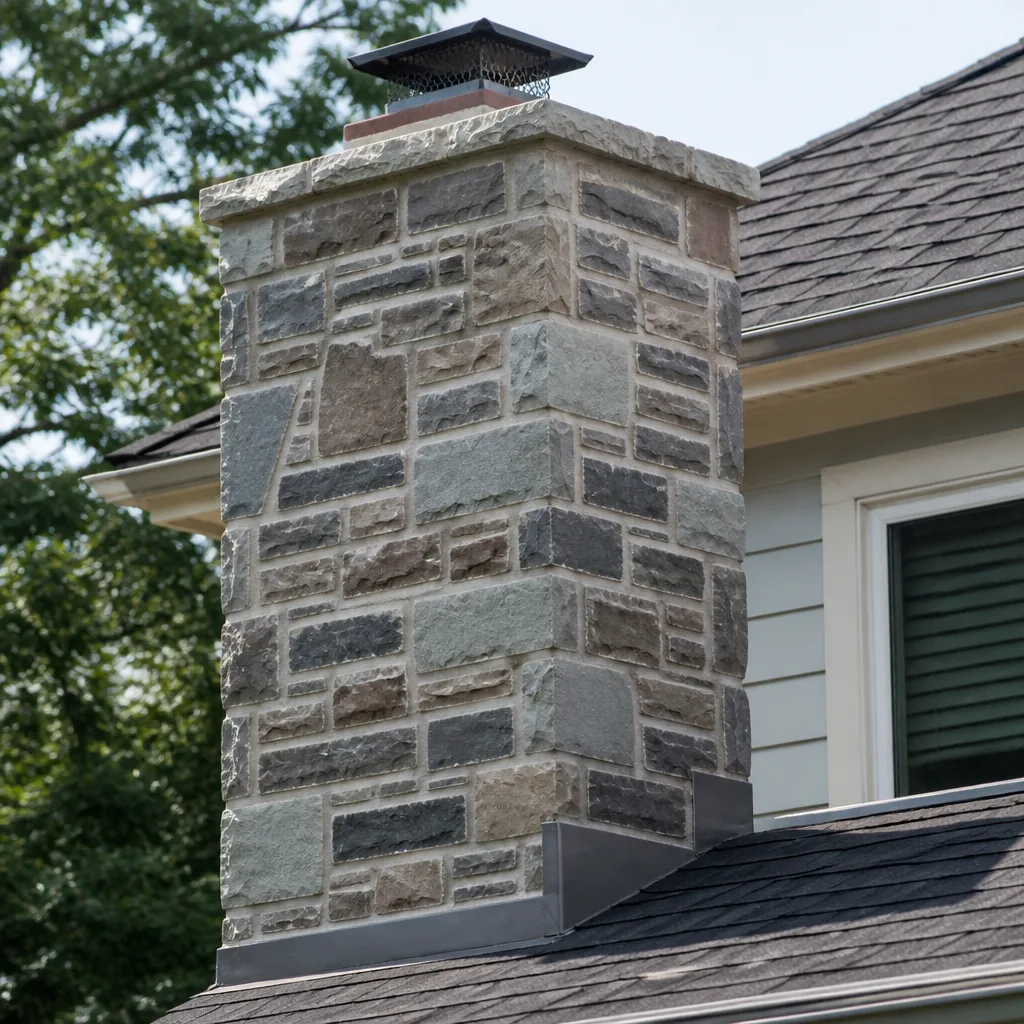 Masonry repair
Level 1 sweep and inspection to the NFPA 211 annual standard - flue, crown, cap, and flashing checked and photographed
Chimney sweep logs do not sweep chimneys. They loosen some creosote - which then falls where a brush and vacuum still have to collect it.
Why Louisville Homeowners Choose HeatShield Chimney Cleaning
We provide independent HeatShield chimney cleaning and repair service in Louisville, Kentucky. What sets our HeatShield work apart is depth: our technicians work with HeatShield resurfacing compound and Armor casings on real flues, diagnose the failure points that system actually develops over time, and pair that repair with the crown, top-plate and masonry work a reline needs to stay serviceable. We can source HeatShield products and install them to the standard the system calls for, and we clean, inspect and repair the whole chimney system around them.
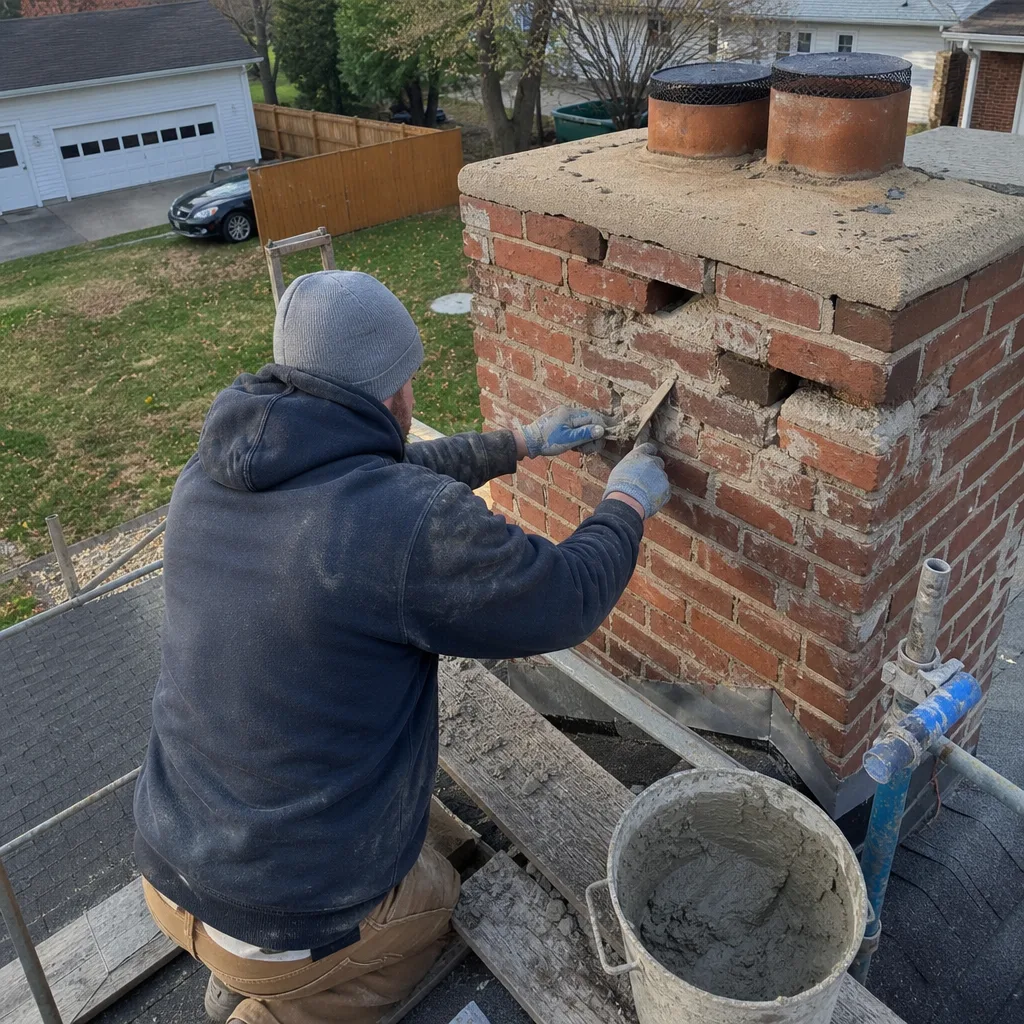
Louisville Chimney Cleaning is an independent HeatShield service provider. We are not affiliated with, sponsored by or authorized by HeatShield. Think of us as the local reference point: the shop that knows how these systems go together and how they fail.
HeatShield is a niche flue-repair system, and most sweep companies in Louisville never get near it. Our technicians have up to 13 years of experience, and our bench handles HeatShield alongside DuraFlex, Gelco, Olympia Chimney, Famco and Copperfield.
Key Takeaways
- HeatShield is a flue resurfacing system, and we service and install it as an independent provider.
- We diagnose the three failure points resurfaced flues actually develop: casing joints, top plates and Insulation Mix.
- We repair what we find, including crown and top-plate work, so a reline keeps working.
- One crew, one visit: cleaning, inspection and repair don’t require scheduling a second company.
Why Trust Louisville Chimney Cleaning for Your HeatShield Chimney Cleaning?
The honest answer is that HeatShield knowledge lives or dies on familiarity. A flue resurfacing system is not something you learn by reading a label. Our technicians have worked with HeatShield products enough to recognize the symptoms before they pull a tool out: a faint smoky smell in the warm months, water staining near the chimney top, a draft that went weak after an appliance change. Each of those points to a specific part of the system.
When we fit components to HeatShield equipment, we look for parts that match its construction and joint geometry. A part that doesn’t line up is a future leak, and we won’t install one to save a few dollars on the ticket.
Our work is warranty-safe. We handle these systems the way the manufacturer’s standards describe, we document what we find, and we don’t take shortcuts that would give a manufacturer a reason to walk away from a claim. We also work on the whole chimney system: the flue, the crown, the cap, the firebox, the top plate. A resurfaced flue sitting under a cracked crown is a flue that will fail again. Louisville homeowners get cleaning, inspection and repair from one accountable provider instead of coordinating three.
Estimates are free and every job is priced by a written estimate agreed before we book.
Styles & brands we work with
- Sweep & inspection
- Caps & crowns
- Flue relining
- Masonry repair
- Gas fireplace service
Common HeatShield Chimney Cleaning Problems We Fix in Louisville
The failure modes below are patterns we see in resurfaced flues, and they happen for predictable reasons. A damp Ohio Valley spring will find every weak spot in a chimney.
- Casing joint sealant drying out or cracking. On older Armor installs the compound at the seams hardens, then cracks as the flue heats and cools. Once that seam opens, creosote and moisture work their way behind the casing and toward the masonry. What looks like a small hairline at the joint can mean a saturated flue wall by the end of a humid summer.
- Insulation Mix settling or washing out. HeatShield Insulation Mix is a vermiculite-based backfill that insulates the liner. Over time it settles, and water intrusion can wash it out of the annulus. The result is a flue that loses insulation, drafts poorly, and lets the liner run hotter than intended. Homeowners usually notice the draft problem first and the temperature issue not at all.
- Top-plate and crown termination leaks. This is where the liner meets the chimney top, and it’s the most common entry point for water in Louisville. The symptom is often rust at the casing collar or a stain on the ceiling near the chase. Louisville’s freeze-thaw winters crack crowns and wash out caps, and a failed top-plate seal lets water run straight down the flue.
- A liner sized for a different appliance. A HeatShield multi-fuel liner sized for the original wood appliance drafts fine until a new insert or a gas conversion goes in. After that the flue is oversized or undersized for what’s actually burning, and you get weak draft, smoke spillage into the room and faster soot buildup.
- Creosote accumulation on a flue that looked clean. A resurfaced flue can build glazed creosote the same as a bare one, especially with a smoldering wood fire. Because the surface is smooth, some owners assume it stays clean longer. It doesn’t. Creosote belongs to the fire, not the wall it lands on.
Here is how the repair side usually goes. A homeowner with an older HeatShield Armor reline notices a smoky smell in summer and a small water stain near the chimney top. A Level 2 inspection typically shows a failed top-plate seal and cracked joint sealant where the casing meets the crown. The usual fix is a full flue sweep, resealing of the casing joints, a crown repair or recoat, and a new top plate to stop water intrusion. That’s a repair on a liner that’s still structurally sound, not a replacement.
HeatShield Parts & Our Repair-vs-Replace Approach
Choosing the right parts for a HeatShield job comes down to fit. HeatShield casings, Insulation Mix and joint sealant are built as one system, and aftermarket liners rarely match the wall thickness or joint geometry that make that system work. When we source components, we look for the professional-grade parts made to fit, not the generic version that leaves a gap at the seam.
Repair versus replace comes down to evidence, and we don’t sell a reline until the camera shows it’s needed. The deciding factors:
- Is the casing still structurally sound? If the flue wall behind it is intact and the joints are the only problem, a clean and reseal is the right call, along with whatever crown or top-plate work is due.
- Has water damaged the masonry behind the casing? A saturated or spalled flue wall can’t be resealed from the inside. That’s when a full reline with DuraFlex or a HeatShield liner earns its keep.
- Does the liner match the appliance? A liner sized for the wrong appliance is a draft problem that resealing won’t fix.
Nothing gets recommended without camera evidence you can see for yourself, and we say plainly when work can safely wait. If it’s just a top plate and a reseal, we’ll tell you. If the crown is failing and the joints are gone, we’ll show you both on camera before we quote it.
Call (844) 560-6386 for a free estimate and we’ll walk through what a HeatShield diagnosis looks like on your chimney.
Our HeatShield Service Process – Step by Step
- 1
Diagnosis. A Level 2 inspection with a camera, checking the casing for joint sealant failure, the Insulation Mix level around the liner, the top plate and crown, and whether the liner is sized to the appliance. Creosote thickness gets logged, so you know what the sweep has to clear.
- 2
Repair or install. For a failed joint, we clean the seam and reseal it. For settled Insulation Mix, we restore the backfill. For a failed top plate, we replace it. For a reline, we set the casing, backfill with Insulation Mix and cure the joints on schedule.
- 3
Test. We check draft with the appliance running, confirm no smoke spills at the firebox or damper, and re-inspect the top termination. If it doesn’t draft right, it’s not done.
- 4
Warranty documentation. You get the inspection record and a photo report of what was found and what was done, which is what a manufacturer looks for if a claim ever comes up.
See the difference
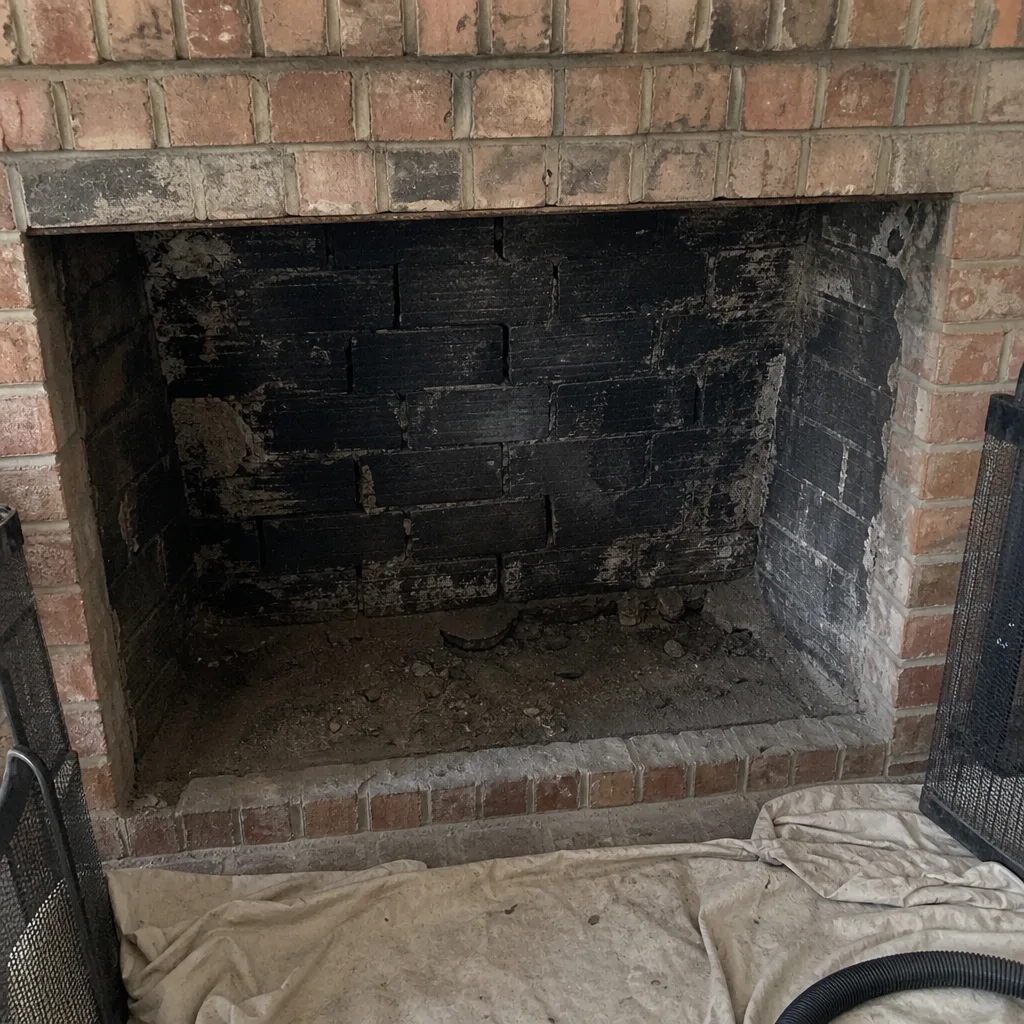 Before
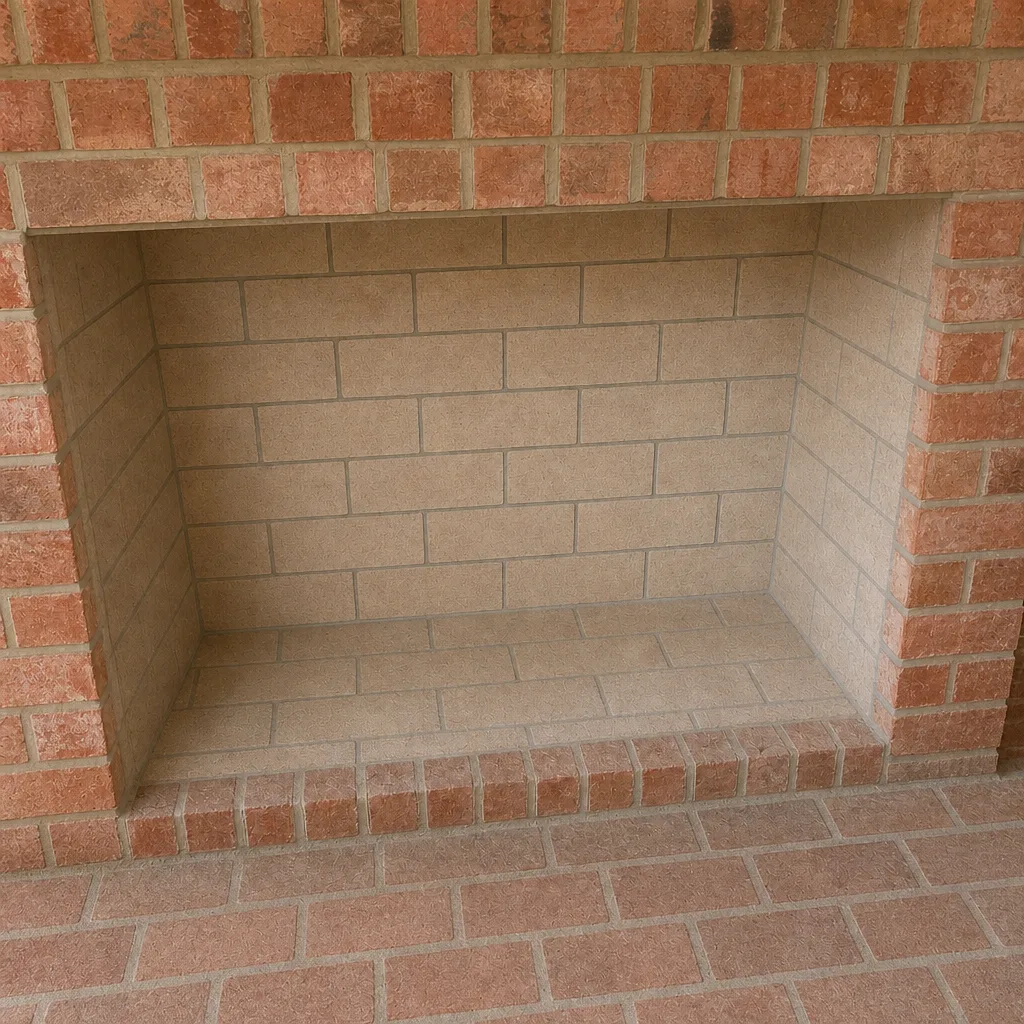 After
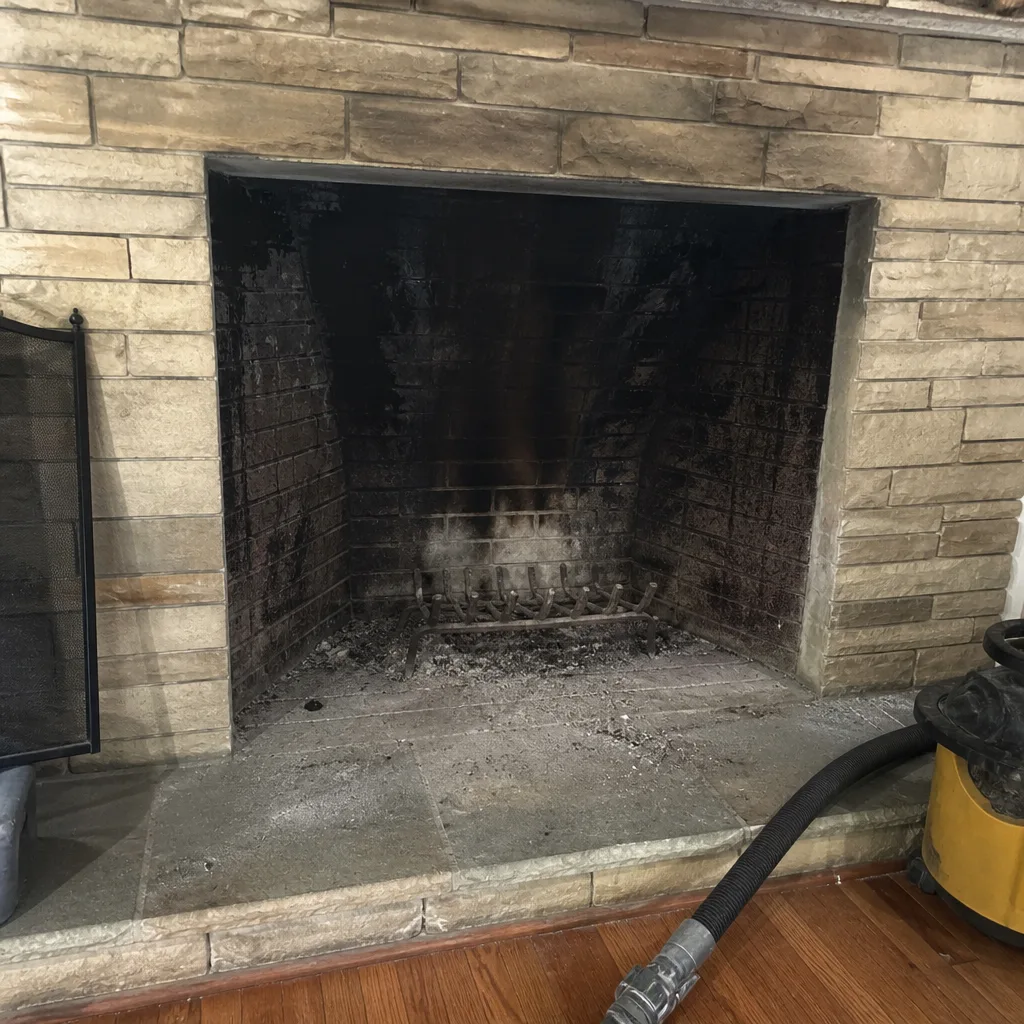 Before
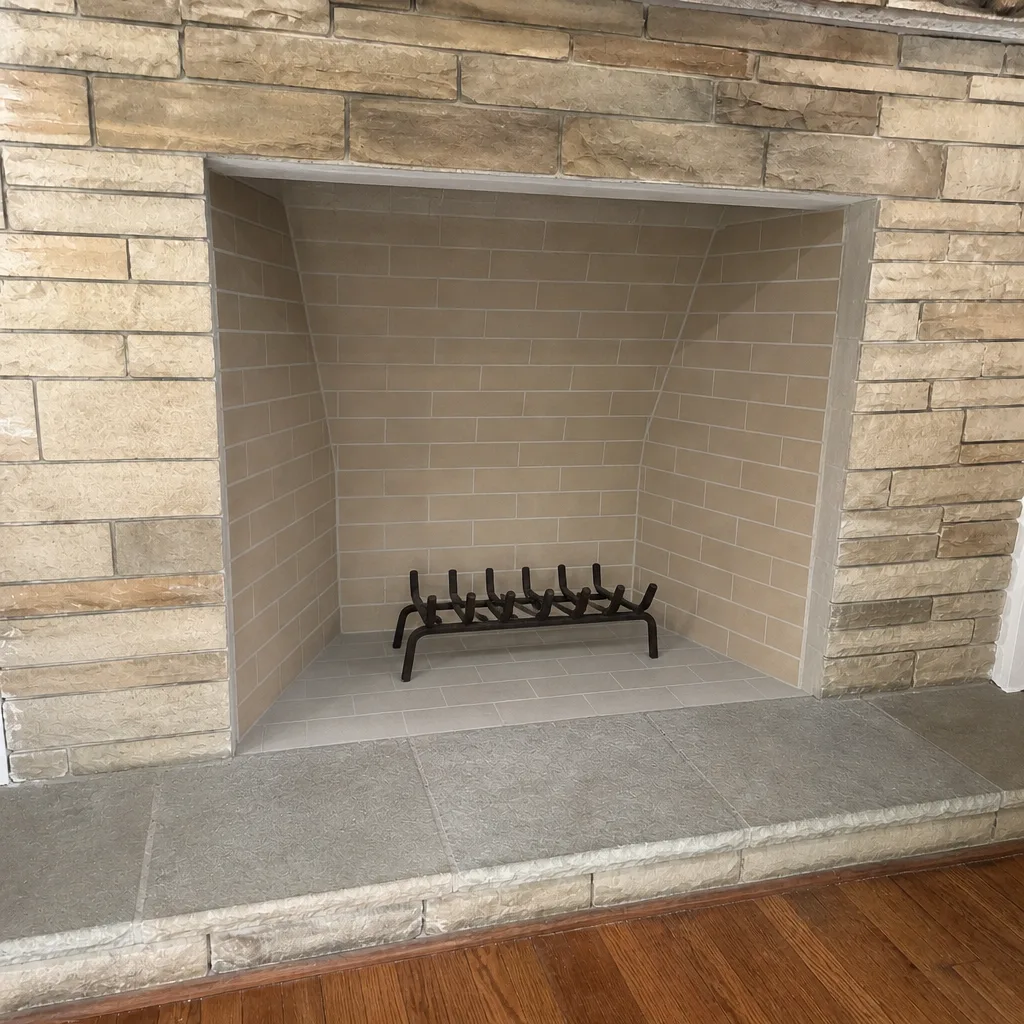 After
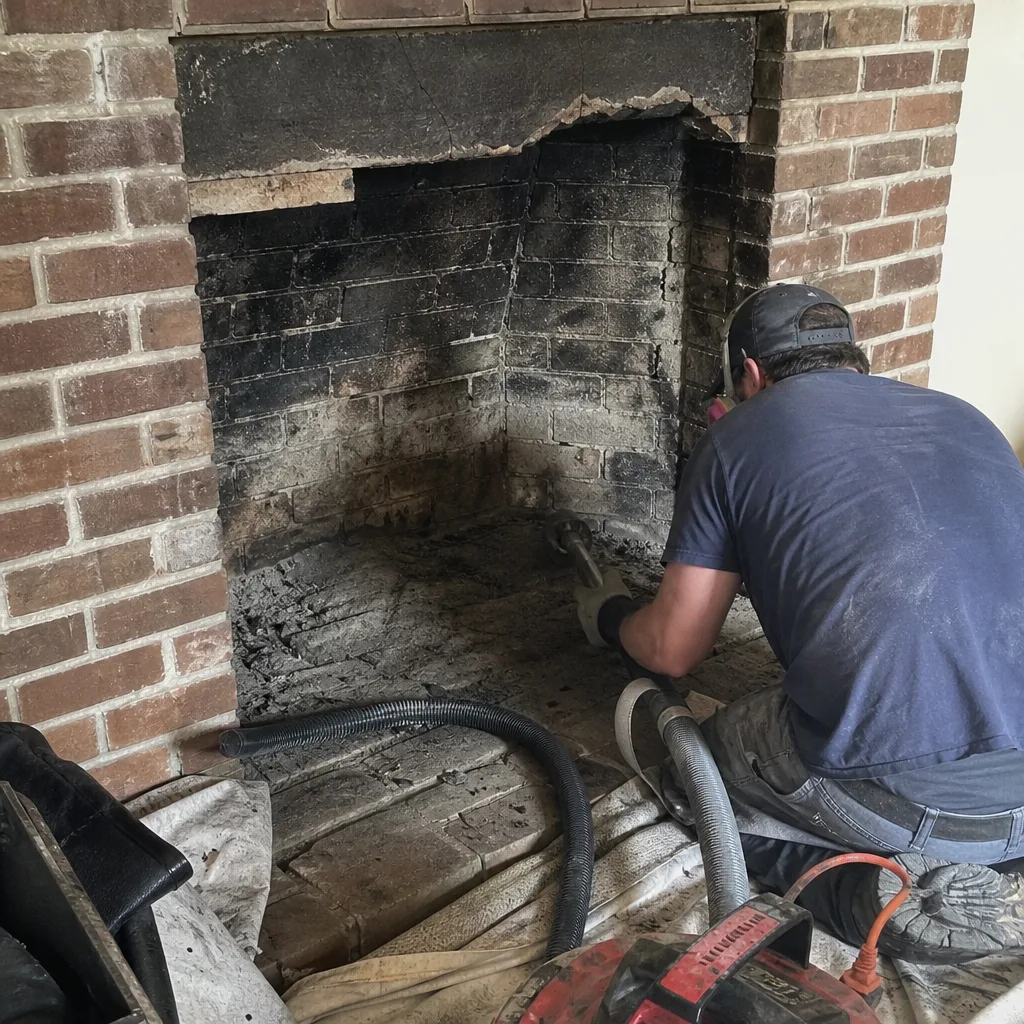 Before
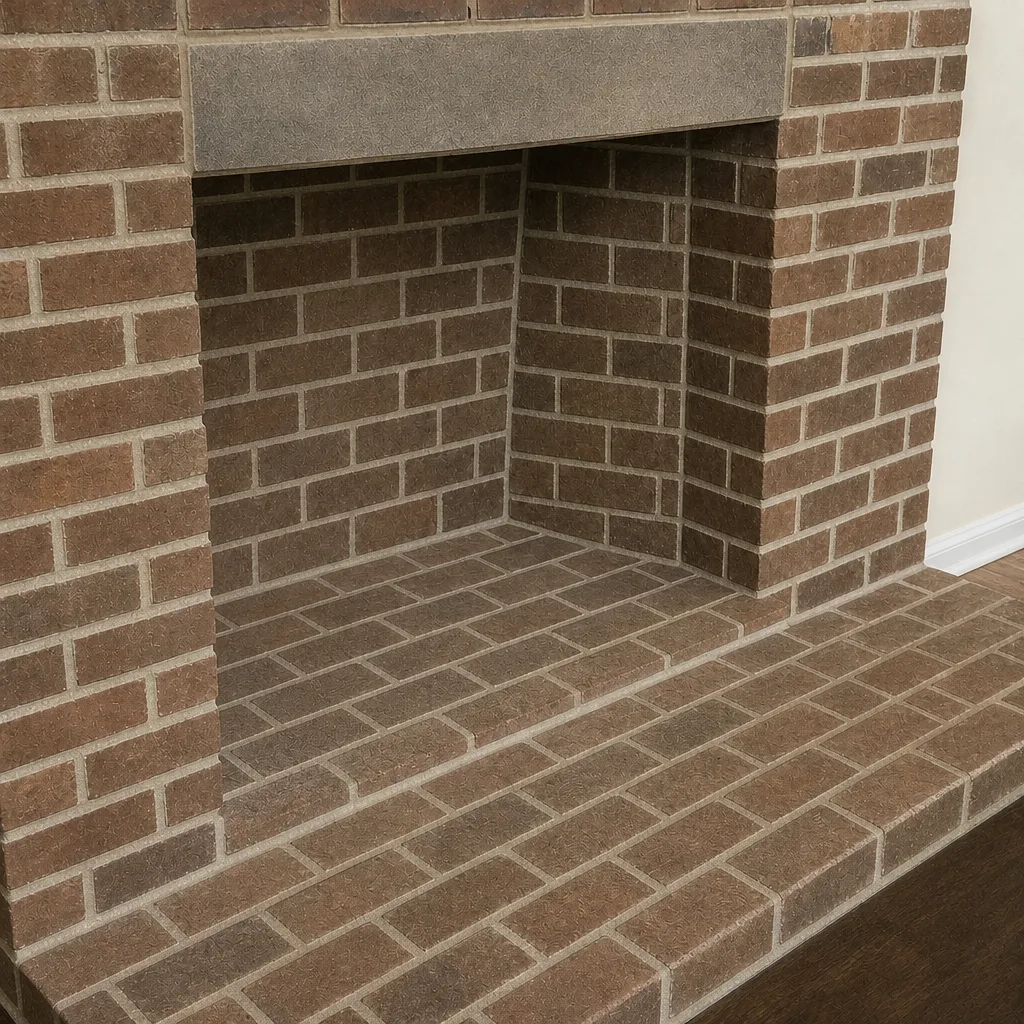 After
HeatShield Products We Service & Install in Louisville
We work with HeatShield as a flue resurfacing system across the core of Louisville, from Old Louisville into the Highlands, Crescent Hill and Butchertown, where 1890 to 1930 brick chimneys often have original or clay-tile liners that age alongside the masonry. We service HeatShield Armor casings, restore Insulation Mix, repair or replace top plates and joint sealant, and reline with HeatShield multi-fuel-rated liner systems where a wood or gas appliance calls for it. That covers the flue cleaning itself and the creosote removal that follows. We fit DuraFlex liner systems when a HeatShield reline isn’t the right match for the flue.
Louisville’s chimney calendar runs on the Derby, not the snow. The weeks after the Kentucky Derby in early May are the busiest stretch for sweeping and inspection here, because thousands of Old Louisville and Highlands homeowners shut down their fireplaces in April and want creosote cleared before the humid Ohio Valley summer sets in. The spring pollen and summer humidity break creosote down and hold odor in the flue, so a pre-summer sweep and reseal matters as much as the pre-winter cleaning.
We Also Service These Brands
We aren’t tied to a single product line. Alongside HeatShield we work with DuraFlex liner systems for full flue relining, Gelco for product access on vent covers and caps, and Olympia Chimney, Famco and Copperfield. That range matters on a HeatShield job. If a diagnosis lands on a different solution, we don’t have to hand you off to a second contractor or send you back to the drawing board.
FAQs – HeatShield Chimney Cleaning Service in Louisville
No. We are an independent HeatShield service provider, not affiliated with, sponsored by or authorized by HeatShield. We work with HeatShield products because we know the system, not because the manufacturer certifies or endorses us.
No. A resurfaced flue still builds creosote the same as any other, and it still gets swept. The smoother surface doesn’t change what the fire produces, and Louisville’s humid summers hold odor in a dirty flue, so an annual sweep is still part of the deal.
You can’t tell from the firebox, and you shouldn’t try to judge it by look alone. A Level 2 inspection with a camera is how you find out, checking the joint sealant, the Insulation Mix level, the top plate and the crown. If you’re seeing a smoky smell in warm weather, a water stain near the ceiling or rust at the top collar, that’s a sign the top plate or a joint has failed, and it’s worth a look before the next burning season.
Yes, but the liner has to be sized for the appliance you’re actually installing, not the one it replaced. A liner matched to the old appliance with a new insert dropped in after is a common cause of weak draft and smoke spillage, and it’s a job for a pro. Tell us before the insert goes in and the sizing gets handled correctly from the start.
Heat cycling and water intrusion. The vermiculite-based backfill around the liner settles over time as the flue expands and contracts, and water getting past a failed top plate or crown washes it out of the annulus. When the insulation goes, the liner runs hotter than intended and the appliance drafts poorly.
That’s often exactly when it earns its money. A HeatShield reline can be installed where the flue is deteriorated, but the crown has to be repaired or recoated first or the water problem just continues. We do both on one visit, rather than leaving the crown for a separate contractor.
We price HeatShield work per job by written estimate, so the number depends on what the inspection finds. A sweep with a standard inspection is one thing; a joint reseal, Insulation Mix restore and new top plate is another; a full reline is a third. You get the camera evidence and the written estimate before anything is booked. Call (844) 560-6386 for an exact quote, because estimates are free.
Book Your HeatShield Service in Louisville, KY
If you have a HeatShield flue and want a crew that knows the system, call us. We’ll do a Level 2 inspection, show you what the camera finds, and quote the repair before booking. Call (844) 560-6386. We answer 24/7. Fast dispatch from 7am to 7pm, Sunday through Friday.
Written by the team at Louisville Chimney Cleaning.