
Last updated November 15, 2026
 Sweep & inspection
 Caps & crowns
 Flue relining
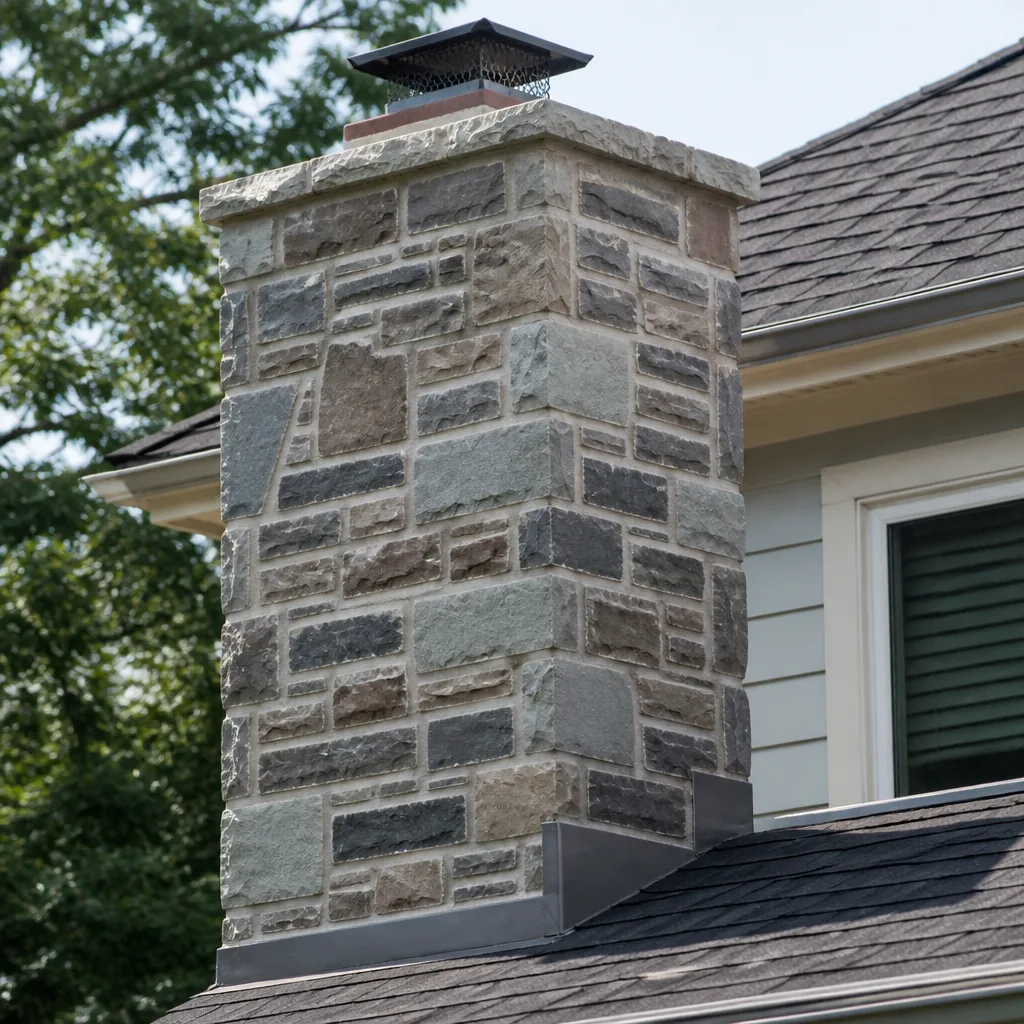 Masonry repair
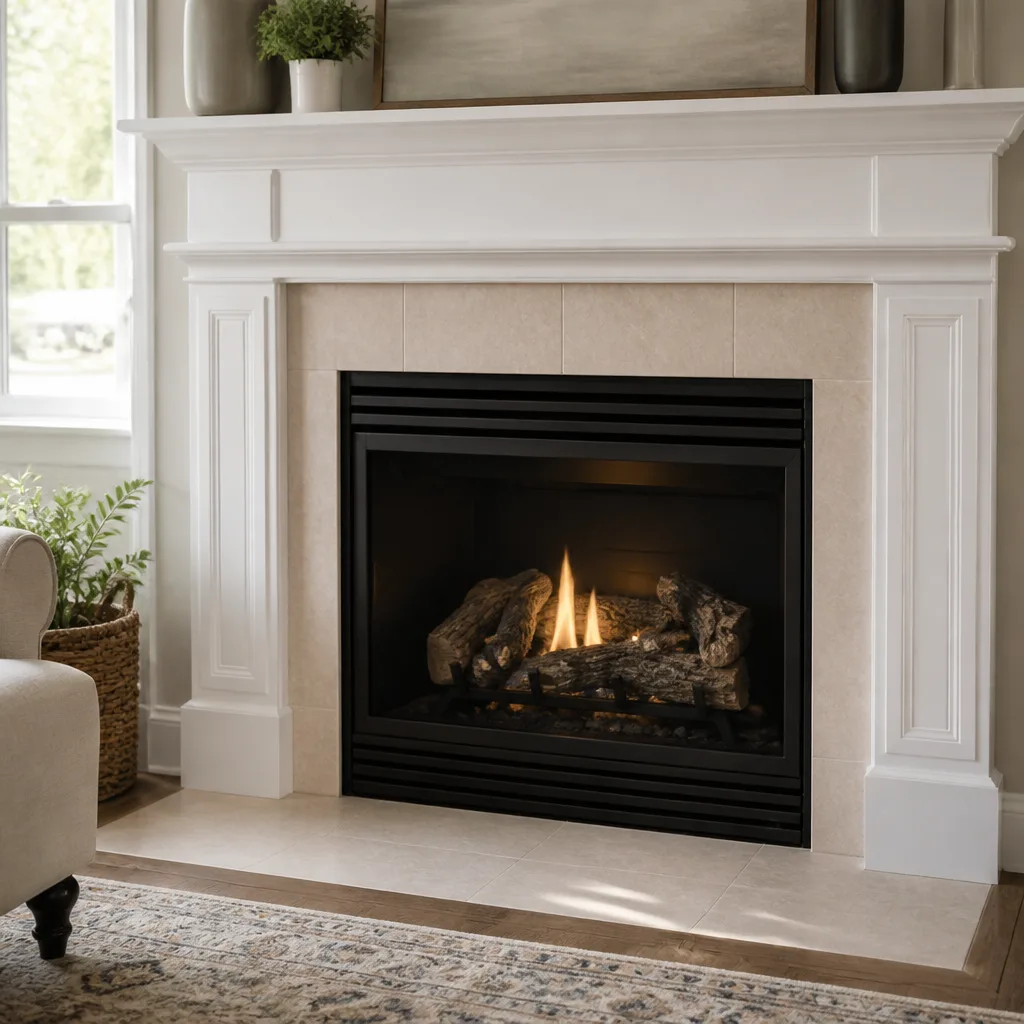 Gas fireplace service
Level 1 sweep and inspection to the NFPA 211 annual standard - flue, crown, cap, and flashing checked and photographed
Chimney sweep logs do not sweep chimneys. They loosen some creosote - which then falls where a brush and vacuum still have to collect it.
Chimney Cleaning Permits, Codes & Inspections in Louisville, KY: What You Need to Know
Here’s the part most homeowners miss: chimney cleaning never needs a permit, but chimney repair often does, and the difference matters more than anyone tells you. A crack in a flue liner gets patched, the job is called done, and no one in Jefferson County ever inspects it. When a chimney fire happens later, an insurer can ask whether the repair was permitted. If the answer is no, the claim can be denied. That scenario has played out in Kentucky, and the contractor who skipped the paperwork is usually unreachable when it does. This guide walks through which chimney services in Louisville require a permit, how NFPA 211 standards meet local code, what a compliant inspection report must contain, and what “grandfathering” really protects in an older Louisville home.
Quick Answer
Chimney sweeping does not require a building permit in Louisville or Jefferson County. Liner replacement, firebox reconstruction, and most structural chimney repairs do require a permit from Louisville Metro’s code enforcement office. Any repair work on an existing chimney triggers a re-evaluation against current NFPA 211 and Kentucky residential code, even when the original chimney was built decades ago under older standards.
Styles & brands we work with
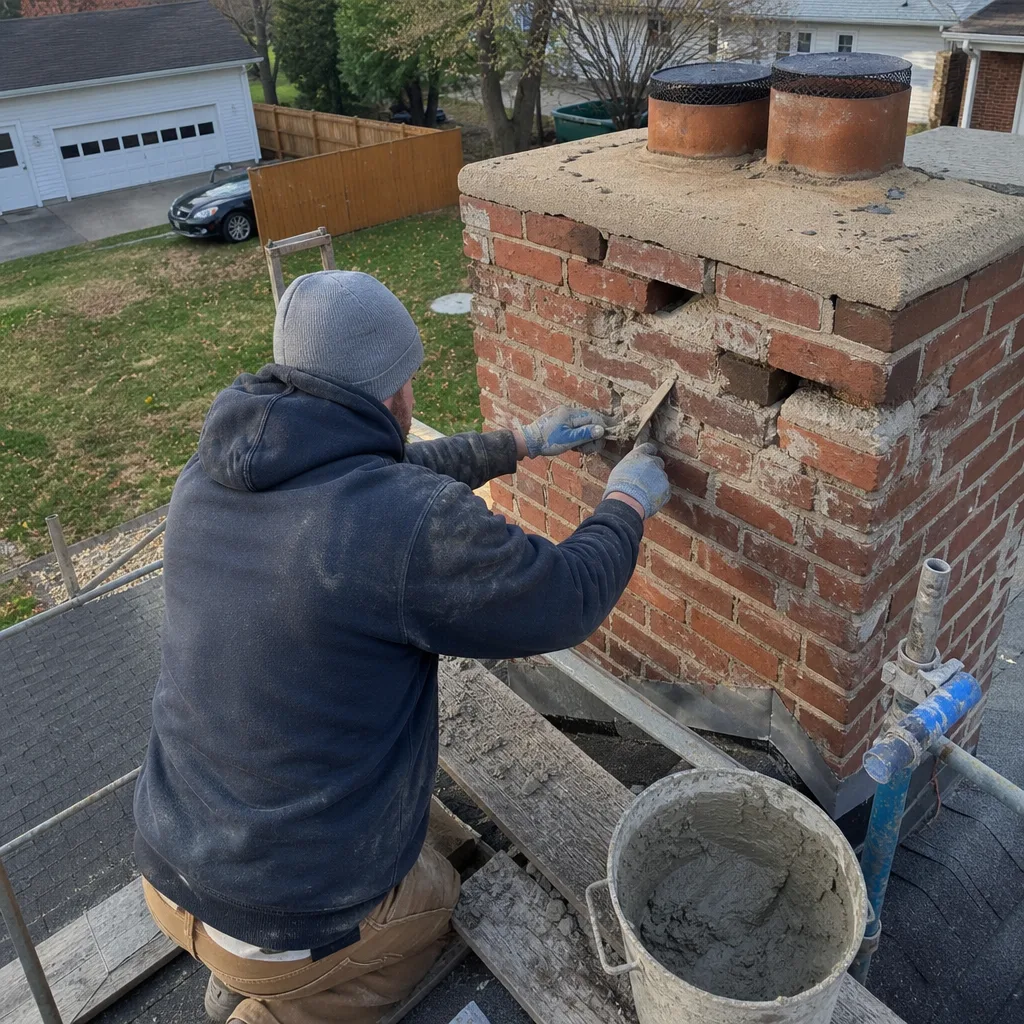
- Sweep & inspection
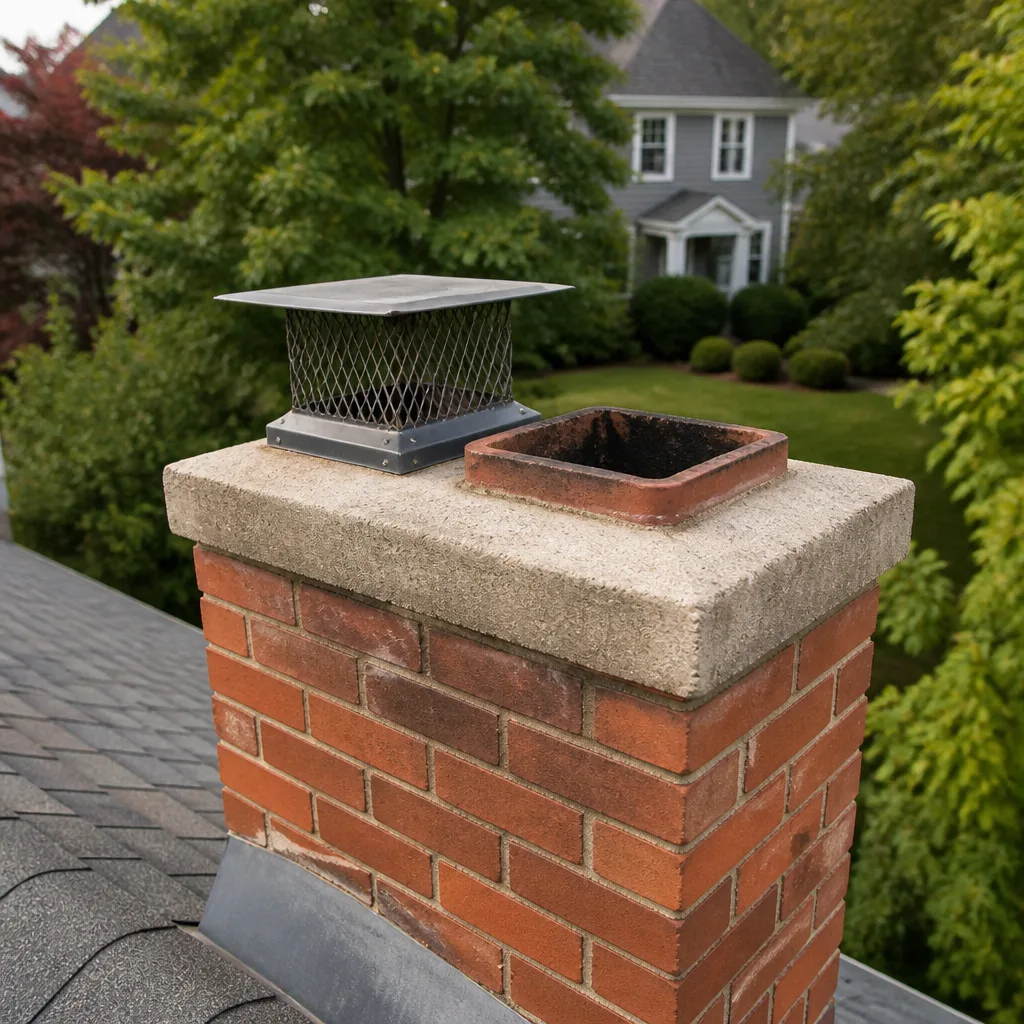
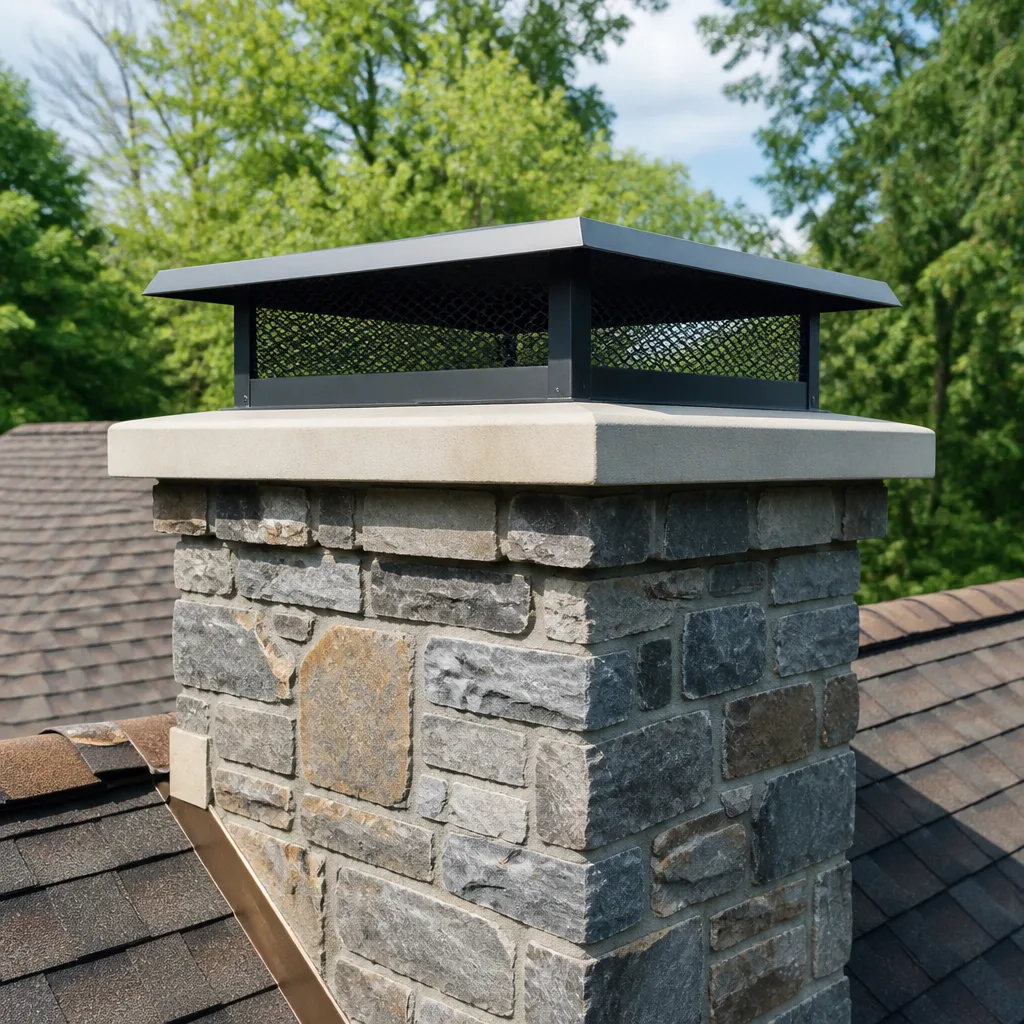
- Caps & crowns
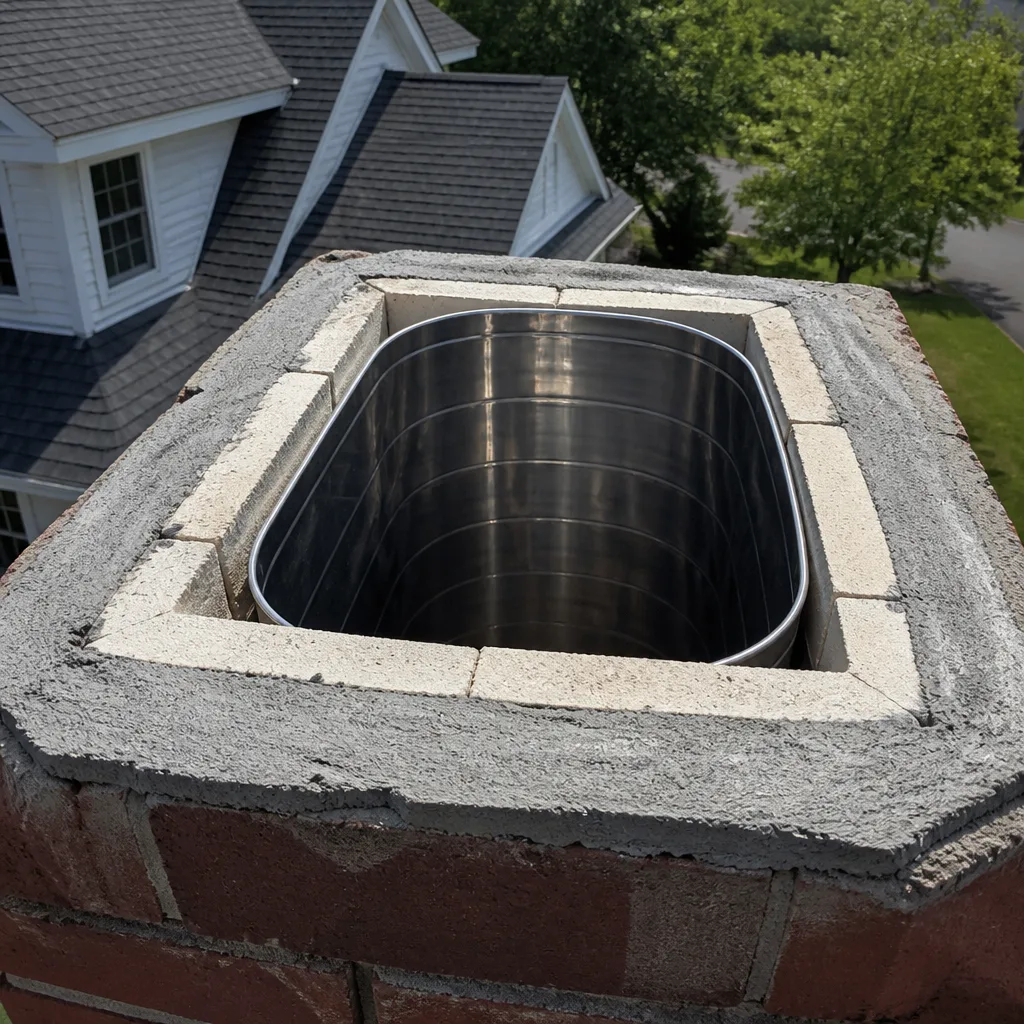
- Flue relining
- Masonry repair
- Gas fireplace service
Table of Contents
- Which Chimney Services Require a Permit in Louisville?
- How NFPA 211 and Louisville Metro Code Work Together
- What a Code-Compliant Level 2 Inspection Report Must Document
- The Permit Process for Chimney Work in Jefferson County
- What Grandfather Clauses Cover in Older Louisville Homes
- Clearances, Liner Sizing, and Why the Numbers Matter
- Chimney Inspections and Real Estate Transactions in Louisville
- Insurance, Documentation, and Why It Ends Up in a Claim
Which Chimney Services Require a Permit in Louisville?
Cleaning a chimney does not require a permit. Repairing or replacing parts of the chimney system almost always does. That distinction catches a lot of homeowners off guard, especially when a routine inspection finds a problem and the repair gets folded into the same visit without any permit paperwork at all.
Here’s how the line falls in Jefferson County:
- Chimney sweeping: No permit. Cleaning removes soot and creosote but changes nothing about the structure, so it falls outside the permitting system entirely.
- Liner replacement or relining: Permit required. Replacing a clay tile liner with a flexible stainless system, such as a DuraFlex liner, is a structural change to the flue. It changes the flue’s dimensions, its heat rating, and its relationship to surrounding combustibles.
- Firebox reconstruction: Permit required. Rebuilding the firebox means new masonry, new clearances, and new material thicknesses. That’s construction, not maintenance.
- Crown repair or replacement: Permit required in most cases. The crown is part of the chimney’s structural top and its water-shedding system.
- Chimney cap installation: Usually no permit when a cap is added to an existing, unmodified flue. A cap that involves modifying the flue top or adding a new chase may need one, so it’s worth a call to Louisville Metro before assuming.
- Flue resurfacing: Depends on scope. A HeatShield resurfacing on an intact flue is generally treated differently than a full liner replacement, and the permitting office weighs it case by case.
- Dryer vent cleaning: No permit. It’s a cleaning and airflow service, not a structural change.
When a crew schedules a chimney sweep and finds a cracked liner mid-visit, the repair can’t simply start that afternoon if a permit is required. A reputable provider pulls the permit first. If a contractor offers to reline a flue on the spot without any paperwork, ask why. The answer tells you a lot about how the rest of the job will go. Call chimney sweep services in Louisville for a clear assessment of what your chimney needs and whether the repair crosses into permit territory.
How NFPA 211 and Louisville Metro Code Work Together
NFPA 211 is the national standard for chimneys, fireplaces, vents, and solid fuel-burning appliances. Louisville Metro’s building code adopts it, then adds local amendments. When a permit is pulled, the inspecting official checks the work against both. The national standard sets the baseline; the local amendments adjust how it’s applied in Louisville.
Where the two meet most often is in clearance requirements and liner sizing. NFPA 211 sets out how far a chimney must sit from combustible materials, the thickness of the flue wall, and the minimum cross-sectional area a liner must maintain relative to the appliance it serves. A wood stove with a given flue outlet needs a liner sized within that standard. Too large and the flue gases cool too fast, encouraging creosote. Too small and the appliance won’t draft properly. In either case, the install sits outside the standard.
Louisville Metro’s amendments tighten a few of those rules for the local climate and housing stock. Louisville’s humid summers and cold winters put a chimney through repeated freeze-thaw cycles. That’s harder on masonry and crowns than a dry climate would be, and the local amendments tend to reflect that. The practical result: a chimney that was compliant when it was built might not meet the standard now that repair work has triggered re-evaluation.
What this means for a homeowner is that the standard your chimney gets measured against is today’s, not the one from forty or fifty years ago. That’s not an excuse for inspectors to push unnecessary work. It’s just how the code works: repair triggers re-evaluation, and re-evaluation is against current standards.
What a Code-Compliant Level 2 Inspection Report Must Document
A Level 2 inspection is required whenever a chimney changes hands, changes appliances, or undergoes certain repairs. NFPA 211 Section 14 sets out what the report must document. Most reports homeowners receive don’t meet that standard. They show a photo of soot and a checkmark. A code-compliant report is much more specific than that.
- Accessibility of every flue: The inspector must note which flues were accessed and how, and which were not. A report that only documents one flue without explaining why the others weren’t viewed is incomplete.
- Video of the flue interior: Camera inspection throughout the full length of the flue, with the footage or a photo report attached. This is the part that lets a homeowner see what the inspector saw rather than take it on faith.
- Condition of the liner: Cracks, gaps, spalling, and missing joints noted individually, not summarized as “liner wear.”
- Clearance verification: The distance between the chimney system and any combustible framing, insulation, or roofing material, measured against NFPA 211 rules.
- Crown and cap condition: The crown’s integrity and slope, and the condition of the chimney cap, including whether it keeps out water and animals.
- Firebox, damper, and smoke chamber: The condition of all three, with any masonry deterioration called out specifically.
- Recommendations labeled by urgency: What needs fixing now, what can wait, and what to watch.
A Louisville buyer at closing often receives an inspection summary no more detailed than a one-page form. That form doesn’t meet NFPA 211 Section 14. If you’re buying or selling in Louisville, ask for a proper Level 2 report. It’s the document that tells you what condition the chimney system is in and what it will cost to fix it.
The Permit Process for Chimney Work in Jefferson County
The permit for chimney work in Jefferson County is filed by the contractor performing the work, not the homeowner. A homeowner can file their own permit for a do-it-yourself project, but a chimney reline or firebox rebuild isn’t a job for a homeowner to take on. The permit is filed under the name of the company doing the work.
- Application: The contractor submits an application to Louisville Metro’s code enforcement office, describing the scope of the chimney work: liner replacement, firebox reconstruction, or crown replacement. The application usually requires details on the existing chimney’s dimensions and the proposed materials.
- Review: The office reviews the application against the current code. Straightforward liner replacements are usually processed quickly. A firebox rebuild that changes the original construction may need a closer look.
- Permit issued: A permit is issued with the scope defined. If the job expands during the work, the permit has to be amended.
- Work performed: The contractor performs the work with the permit posted as required.
- Inspection: The code office inspects the finished work, checking liner sizing, clearances, and material specifications against the permit application and the code.
- Sign-off: Once the inspection passes, the office issues a final sign-off. The sign-off is the document you want for your records.
Turnaround varies with the code enforcement office’s current workload. A permit that only covers a liner replacement tends to move faster than one covering a full firebox reconstruction. The important thing is that the job doesn’t start before the permit is issued and doesn’t close without the sign-off. A signed-off permit with the inspection record is worth more than any verbal assurance from a contractor.
What Grandfather Clauses Cover in Older Louisville Homes
Grandfather clauses protect a chimney from being forced to meet every current standard just because it exists. A 1940s home in the Highlands with an original chimney and no modifications can usually stay as it is. That protection ends as soon as repair work triggers re-evaluation.
Here’s where it gets tricky. The line isn’t “was it built before the code changed” so much as “has the chimney been modified in a way that triggers review.” Some of the situations that trigger re-evaluation:
- Replacing the liner, even a partial replacement.
- Rebuilding the firebox or the smoke chamber.
- Replacing the crown or the top section of the chimney.
- Changing the appliance served by the flue, such as swapping a wood-burning fireplace insert for a gas insert or vice versa.
- Lengthening or shortening the chimney height.
What grandfathering does not protect is unsafe conditions. A chimney with a cracked liner isn’t grandfathered into safety. It’s a chimney with a cracked liner. The crack allows heat and carbon monoxide into spaces they shouldn’t reach, and the standard for that hasn’t changed. A chimney in a 1920s house in Old Louisville gets measured against the same NFPA 211 requirement for a sound flue as a chimney built last year.
The common misconception is that grandfathering means “leave it alone and it’s fine.” It doesn’t. It means the chimney isn’t required to be brought up to current standards automatically. When repair work begins, that changes, and the scope of the repair determines how much of the system gets re-evaluated.
Clearances, Liner Sizing, and Why the Numbers Matter
The numbers governing a chimney’s clearances and liner sizing aren’t arbitrary. They derive from how heat moves and how creosote accumulates. Getting them wrong on a Louisville chimney has consequences that don’t show up for years, and then show up all at once.
NFPA 211 sets minimum clearances between the chimney’s outer surface and any combustible material, such as wood framing, drywall, or insulation. A masonry chimney in a Louisville home with a wood-framed chimney chase can develop hidden gaps in those clearances over time. When a liner replacement reopens that chase, the gaps get found and fixed. That’s part of why the repair triggers re-evaluation.
Liner sizing follows the appliance. A wood stove with a flue outlet of a given diameter needs a liner sized to maintain the right draft and flue gas temperature. That’s why a professional relining job generally uses a flexible liner sized to the appliance rather than a generic replacement, and why a brand like DuraFlex gets used for tight or offset flues. Off-the-shelf substitutes from a hardware store don’t meet the standards for the appliance the chimney serves.
Chimney caps and vent hardware follow the same logic. A proper cap is sized and sealed to keep water out of the flue and animals from getting in, without restricting draft. A cap from a hardware store bin may fit loosely or restrict the flue. Famco and Gelco make professional-grade caps designed for the specific flue dimensions they’re sized to. That’s the kind of equipment a code inspector expects to see on the finished job.
Chimney Inspections and Real Estate Transactions in Louisville
Louisville has a lot of older housing stock. Highland bungalows, Clifton four-squares, and Old Louisville townhouses with chimneys that date back further than any of us would like to think about. When one of those homes changes hands, the chimney inspection carries more weight than most buyers realize.
A Level 1 inspection is a visual check that matches the flue as-is. A Level 2 inspection goes further and includes video of the flue and documentation of clearances. A Level 3 goes further still and involves opening up parts of the chimney structure. For a home sale in Louisville, a Level 2 is almost always what a buyer needs, whether the home was built in 2024 or 1924.
What the Level 2 report means for the transaction:
- It puts a price on any defect. A buyer who knows a liner is cracked has a number to negotiate with, not a vague worry.
- It documents what was found before the sale, which protects both sides. If the chimney later develops a problem, there’s a baseline.
- It flags whether the repair, once identified, requires a permit and a final sign-off, which affects the closing timeline.
Sellers benefit from a Level 2 as much as buyers. A pre-listing inspection that finds a cracked crown or a failing liner lets the seller fix it on their own schedule and with a permit in place, rather than scrambling through a buyer’s inspection period. In our experience, the sellers who get their chimney inspected before listing close with fewer surprises than those who wait for the buyer’s inspector to find the problem.
Insurance, Documentation, and Why It Ends Up in a Claim
Most homeowners don’t think about chimney documentation until a claim is on the table. By then, the record is already set, or not set. The presence or absence of a permit and final sign-off can matter a great deal when an insurer asks how a repair was done.
Here’s what contributes to that record:
- The permit and final sign-off: Proof the work was inspected by the code office against current standards.
- The Level 2 inspection report: Proof of the chimney system’s condition before the work, with camera evidence.
- The photo report from the repair: Proof of what was installed, whether a HeatShield resurfacing, a DuraFlex liner, or new masonry.
- The written estimate and invoice: Proof of the scope and the materials used.
An insurer looking at a claim wants to see that the work was done correctly. A permit with a final sign-off is the clearest evidence a homeowner can have. The lack of one opens a question the homeowner doesn’t want to be asked: was this repair done to code?
We work with your insurer where relevant, but the more important thing for a homeowner is to build the record before the claim. The inspection report, the permit, the sign-off, and the photo documentation together tell the full story. That’s part of why we work with professional-grade products from DuraFlex, HeatShield, and other recognized brands. The materials are documentable, and the work meets a standard that an insurer can verify.
Common Mistakes to Avoid
- Assuming cleaning requires a permit. It doesn’t. Cleaning removes creosote without changing the chimney’s structure. Save the permit questions for repairs and liner jobs, where the paperwork actually matters.
- Assuming repair doesn’t require one. This is the costlier mistake. A liner replacement or firebox rebuild without a permit leaves the homeowner with an unpermitted job, and that shows up if the claim gets filed.
- Accepting a verbal inspection report. If a contractor says “your liner is cracked, you need a reline” without showing you camera footage or a written Level 2 report, ask for it. You can’t verify what you can’t see.
- Trusting a grandfather clause without checking scope. A 1940s chimney in the Highlands may be grandfathered for its original construction. That protection ends when a repair triggers re-evaluation. Ask what the repair changes.
- Skipping the permit to speed up closing. A real estate transaction in Louisville sometimes moves faster than a permit does. Rushing past the permit puts the buyer at risk for a job that isn’t documented. The final sign-off is worth the wait.
- Using a hardware-store cap on a professional flue. A cap sized for a general-purpose vent can restrict draft or fail to seal correctly. Famco and Copperfield caps are sized for the flue they serve. A code inspector will check.
- Waiting until the chimney fails to get a Level 2 inspection. A Level 2 report done while the chimney is intact gives you a baseline for the future. It costs less to document a sound chimney than to reconstruct a damaged one.
See the difference
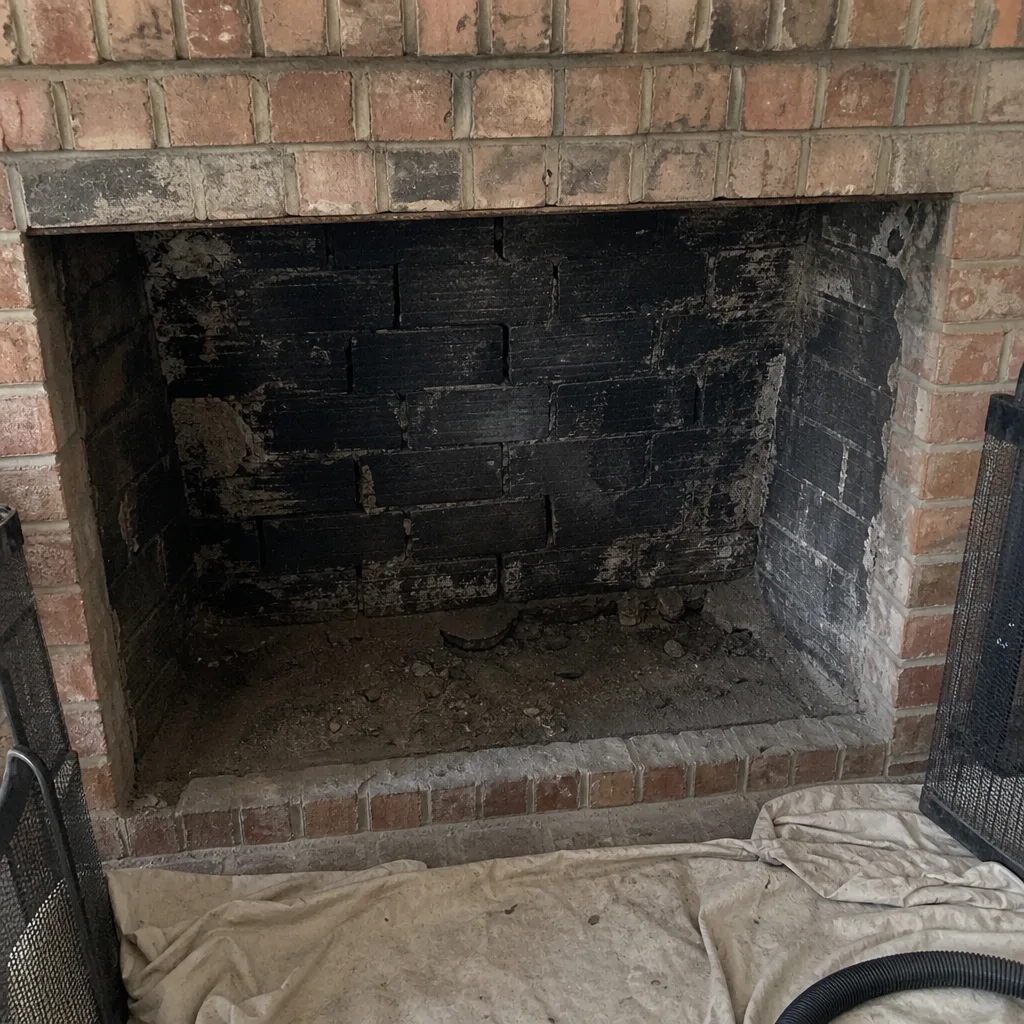 Before
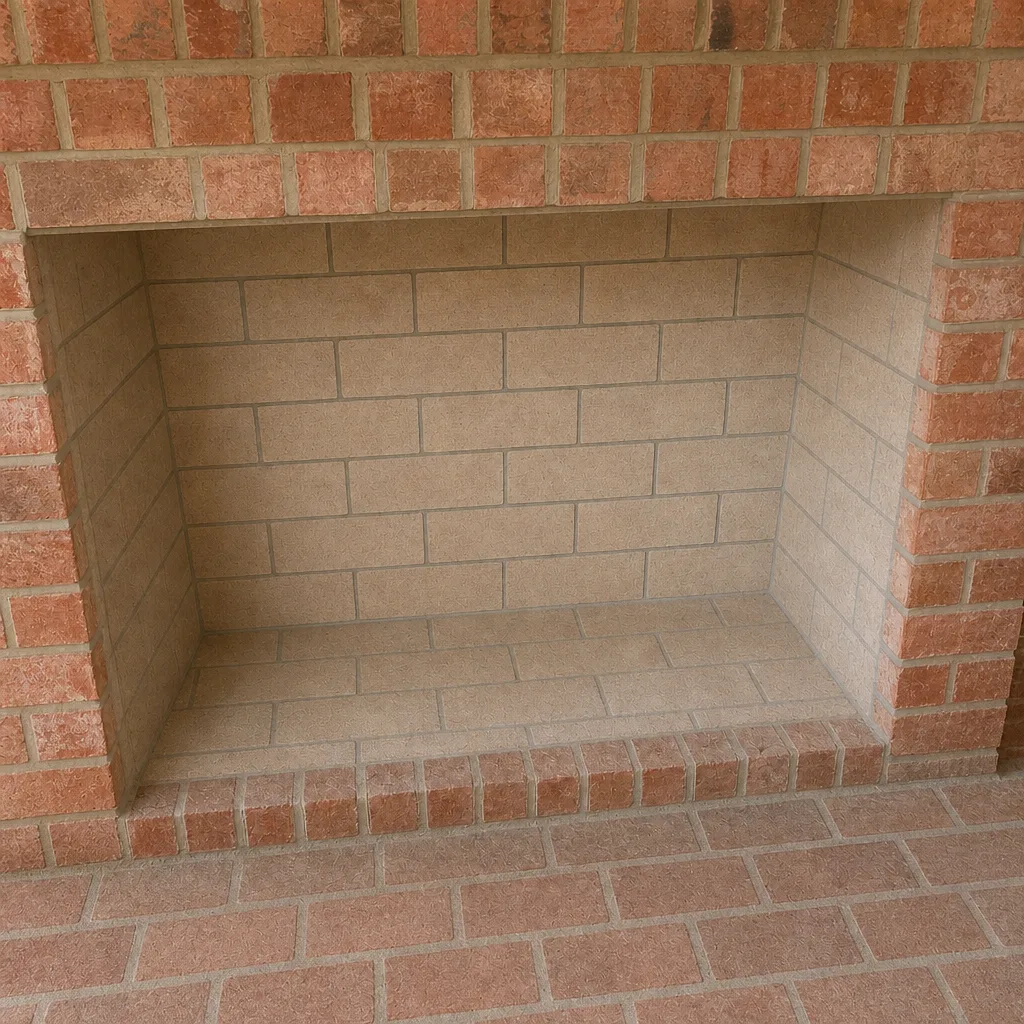 After
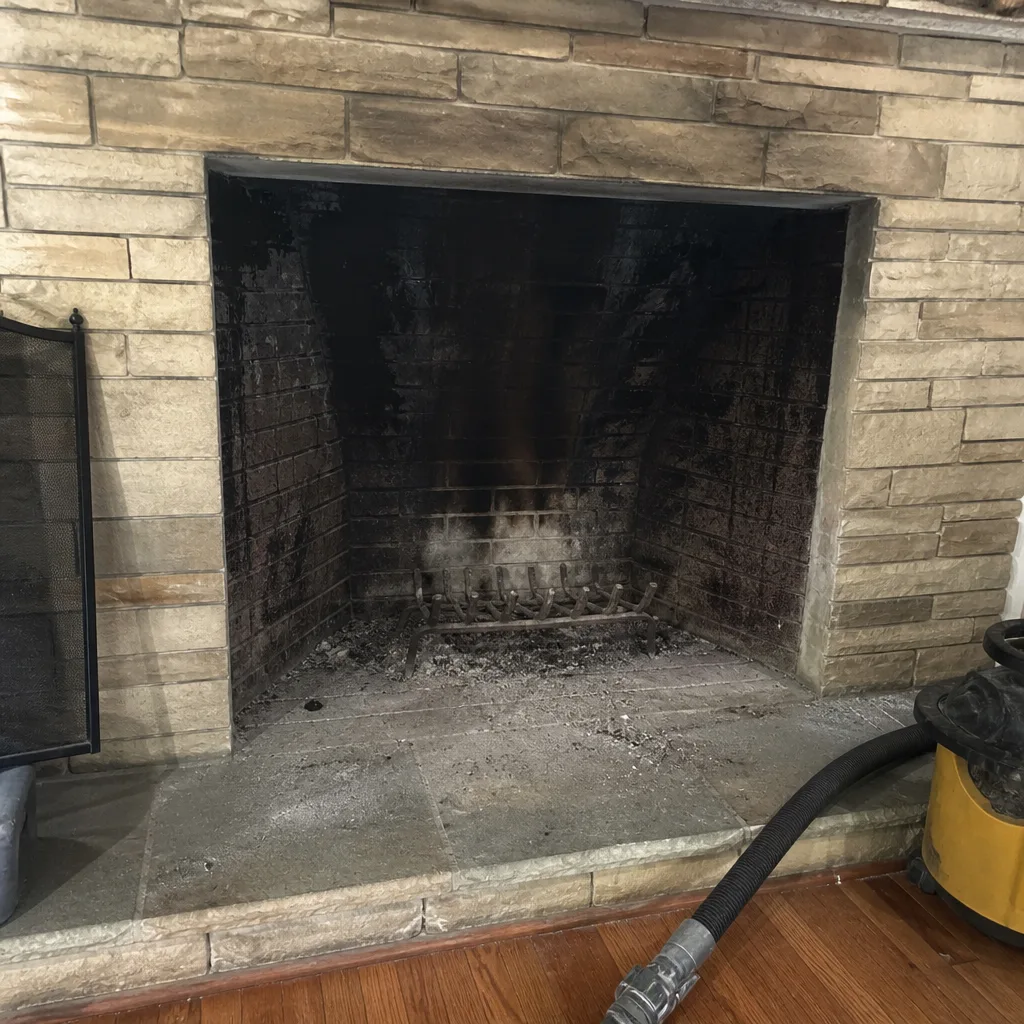 Before
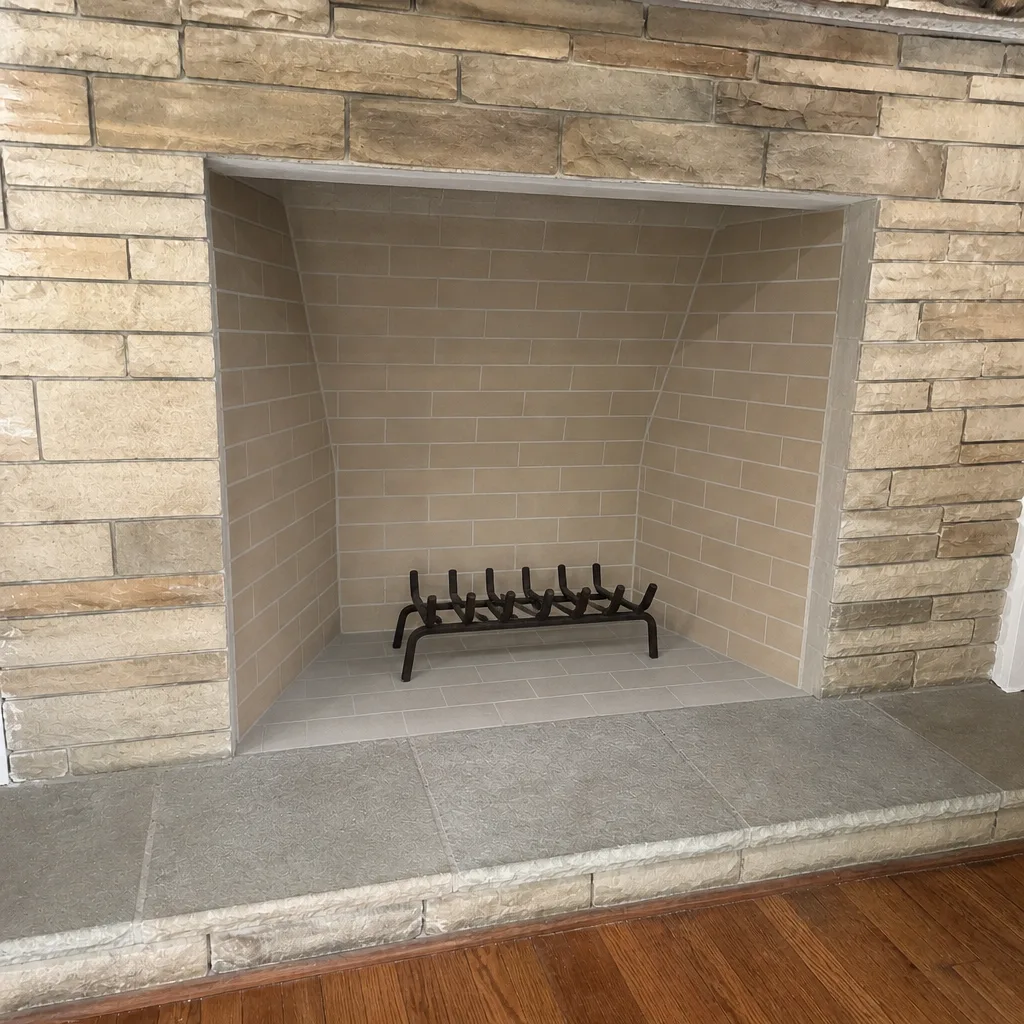 After
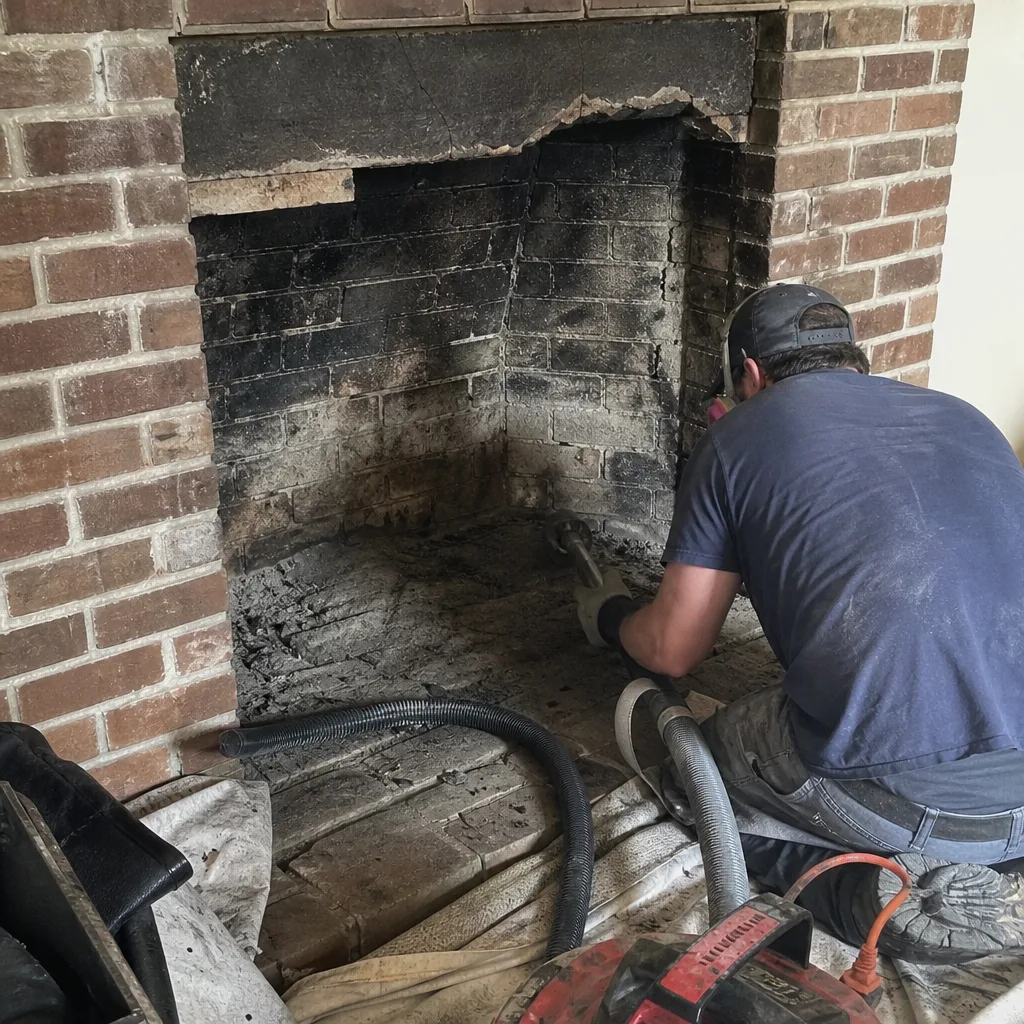 Before
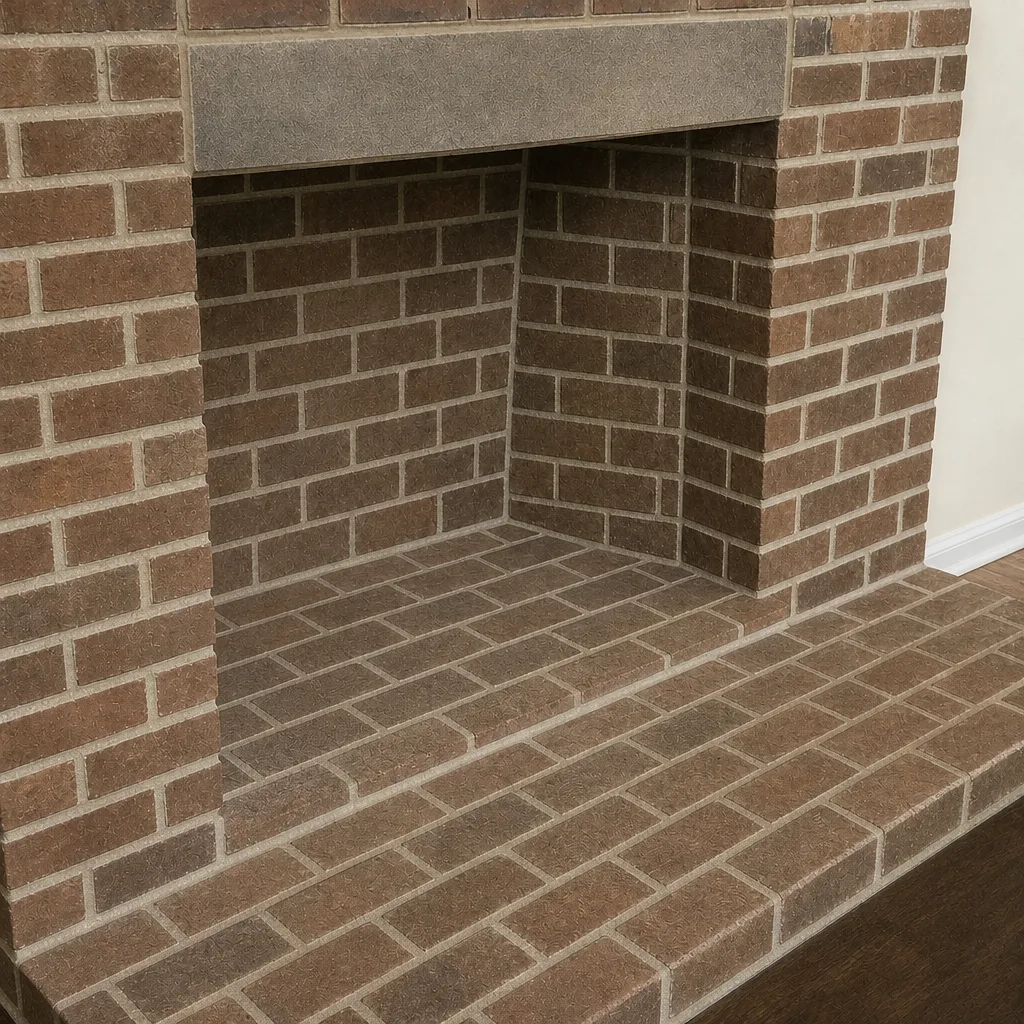 After
When to Call a Professional
Chimney work isn’t a handyman task. The clearances, liner sizing, permit process, and inspection requirements are specific, and getting any of them wrong means someone else has to fix it. The scenarios where a homeowner should call in a professional rather than trying to handle it themselves:
- A cleaning or inspection reveals a cracked, spalling, or missing liner.
- You’re buying or selling a Louisville home and need a Level 2 inspection for the transaction.
- Your insurer or home inspector has flagged a chimney or dryer vent deficiency.
- The firebox shows damaged brick, mortar deterioration, or a warped damper.
- The crown is cracked or missing material.
- You’re not sure if the last repair was permitted, or if the liner is sized for the appliance.
Louisville Chimney Cleaning offers free estimates in Louisville. Call (844) 560-6386. We answer 24/7. Fast dispatch from 7am to 7pm, Sunday through Friday. We handle the cleaning, the repair, and the documentation, including the permit and sign-off where required, so a homeowner isn’t coordinating between two or three companies.
Frequently Asked Questions
No. Chimney cleaning does not require a permit in Louisville. Cleaning removes soot and creosote from an existing flue without changing the system’s structure or clearances. A permit is only required when the work changes something structural, like a liner replacement, firebox reconstruction, or crown replacement. If a contractor suggests a permit is needed for a routine cleaning, ask for the specific reason. Call (844) 560-6386 for a clear assessment of what your chimney needs.
Yes, in most cases. Replacing a liner, whether clay tile or a flexible stainless system like DuraFlex, is a structural change to the flue. It changes the flue’s dimensions, its heat rating, and its relationship to surrounding combustibles, which is exactly what the code office inspects. The permit is filed by the contractor doing the work, and the project requires a final sign-off. Call (844) 560-6386 for a free estimate on a permitted reline.
A Level 2 inspection is a camera inspection of the full flue length, combined with a documented review of clearances, crown, cap, and firebox. It’s required whenever a chimney changes hands, changes appliances, or undergoes certain repairs. NFPA 211 Section 14 sets out what the report must contain. In Louisville, a Level 2 inspection is standard for a real estate transaction and worth getting before a major repair. Call (844) 560-6386 to schedule one.
Partially. A chimney built under older standards is typically grandfathered for its original construction, so it isn’t forced to meet every current requirement just because it exists. That protection ends as soon as repair work triggers re-evaluation. A liner replacement, firebox rebuild, or crown replacement brings the chimney under current NFPA 211 and Louisville Metro code for the scope of that work. Grandfathering also doesn’t excuse unsafe conditions like a cracked liner. Call (844) 560-6386 for an assessment of what your specific chimney needs.
The contractor performing the work. A homeowner can file their own permit for a do-it-yourself project, but a chimney reline or firebox rebuild isn’t a job a homeowner should take on. The permit goes in the contractor’s name, the code office inspects the finished work, and the final sign-off becomes your record. If a contractor offers to start a permitted chimney repair without filing the paperwork, that’s a red flag worth taking seriously. Call (844) 560-6386 to work with a team that handles the permit as part of the job.
No. Dryer vent cleaning doesn’t require a permit in Louisville or Jefferson County. It’s a cleaning and airflow service that removes lint buildup from the vent line and improves the appliance’s ability to exhaust safely. The same combustion-safety framework we apply to chimneys applies to dryer vents, which is why we offer dryer vent cleaning as a formal service. Call (844) 560-6386 for a free estimate on a dryer vent cleaning.
The Bottom Line
The rule of thumb for chimney work in Louisville is straightforward: cleaning doesn’t need a permit, repair usually does, and any repair triggers re-evaluation against current NFPA 211 and Jefferson County code. Grandfathering protects a chimney’s original construction but not its safety, and not the scope of new work. A Level 2 inspection report built to Section 14 gives you camera evidence of what’s actually in your flue, and the permit with a final sign-off gives you the record an insurer can verify. If you’re not sure which category your chimney falls into, ask before the work starts. A quick call now is worth a lot less than a denied claim later.
For chimney sweeping, chimney repair, and documentation in Louisville, we handle the cleaning and the repair on one visit, using professional-grade materials from HeatShield, DuraFlex, Famco, and other recognized brands. Our technicians have up to 13 years of experience. For a free estimate, call (844) 560-6386. We answer 24/7. Fast dispatch from 7am to 7pm, Sunday through Friday. You can also read more about our full scope of work at Louisville Chimney Cleaning.
Written by the team at Louisville Chimney Cleaning.