
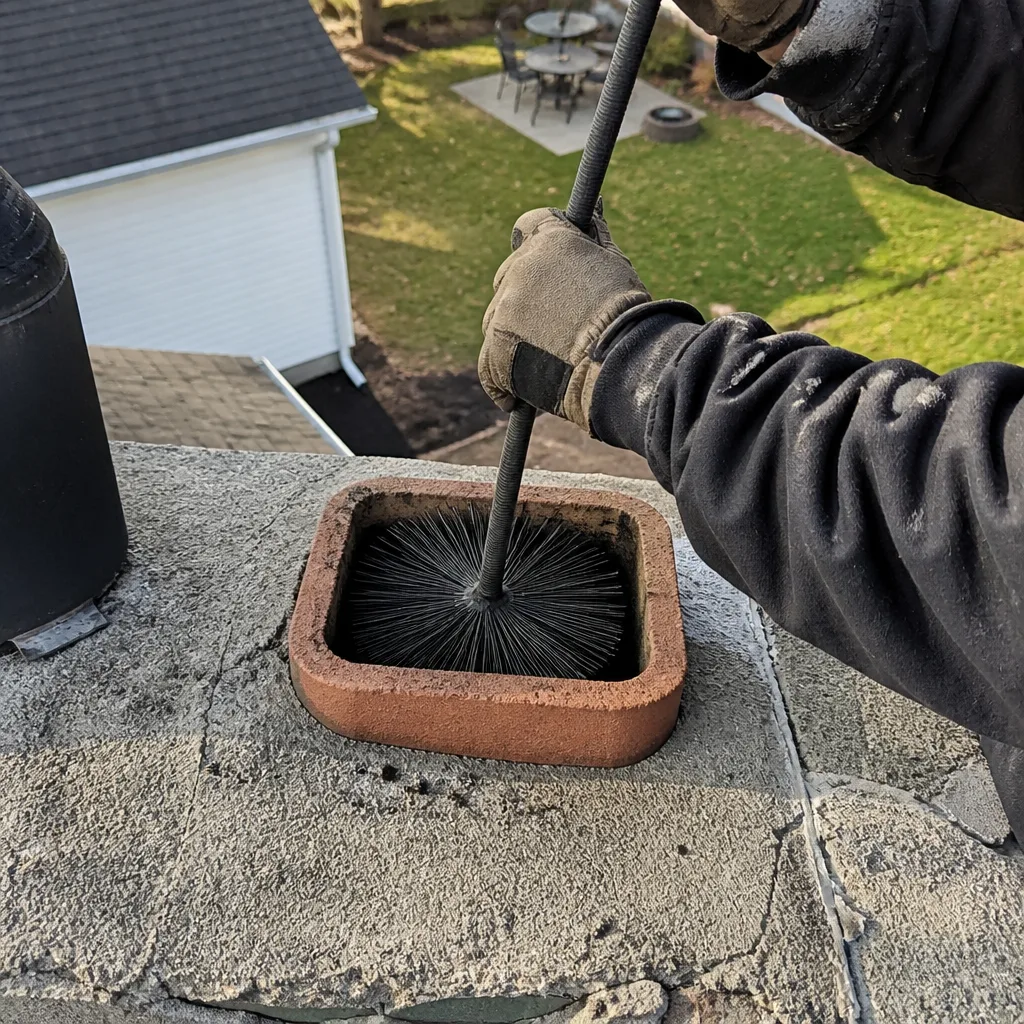
Last updated November 15, 2026
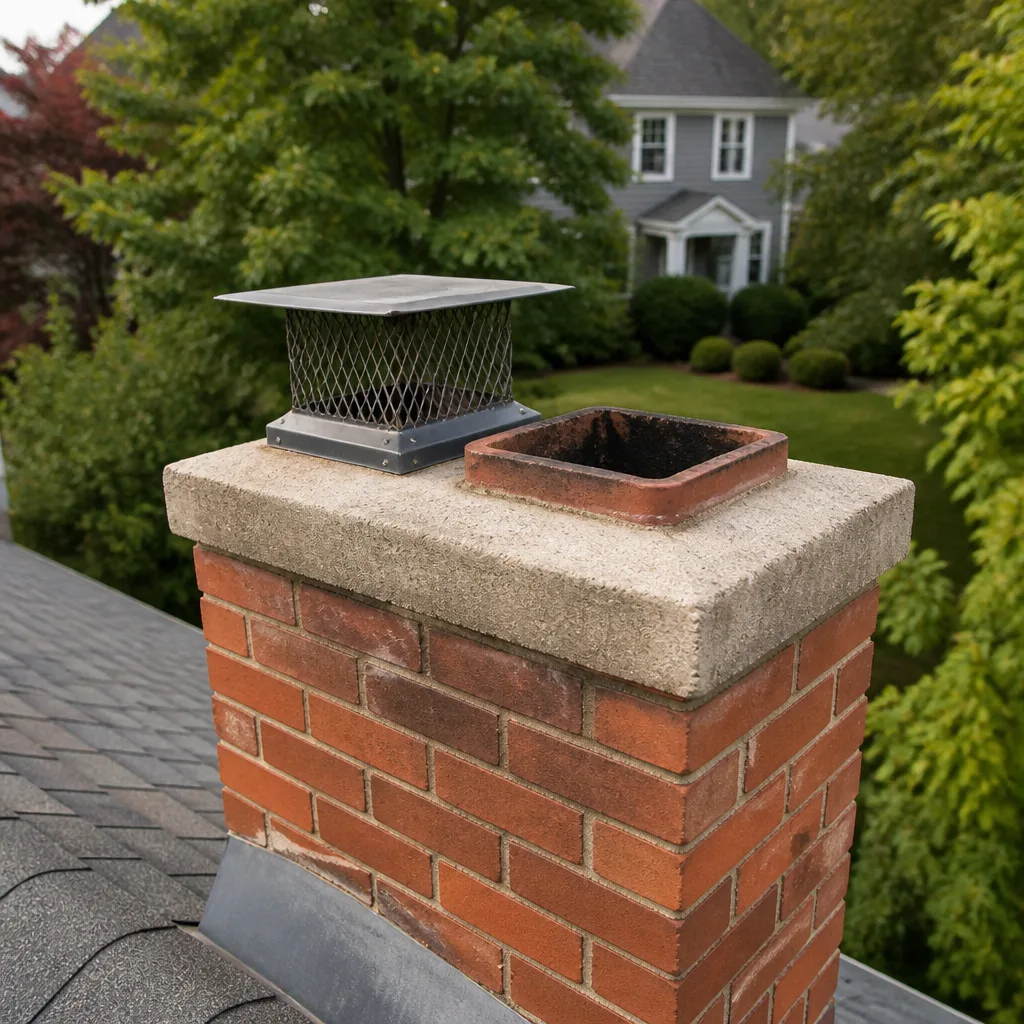 Sweep & inspection
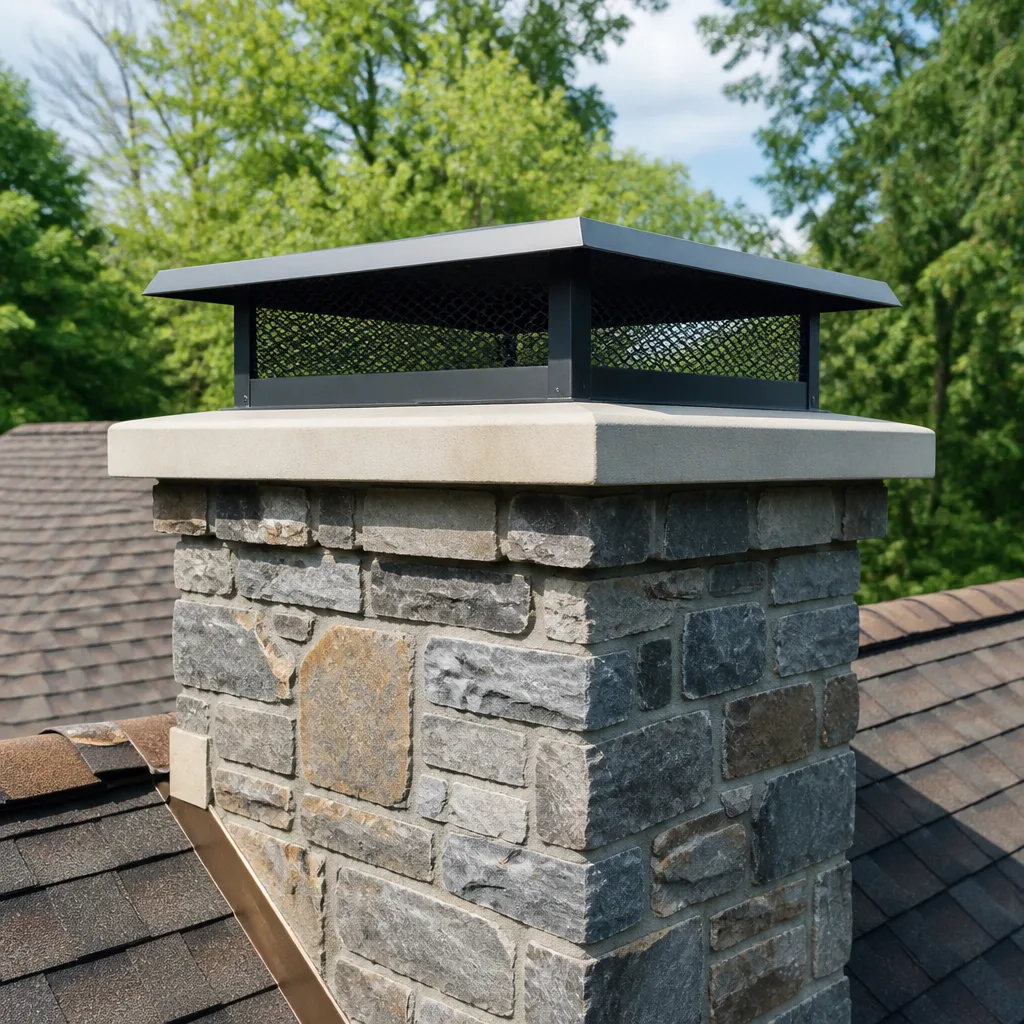 Caps & crowns
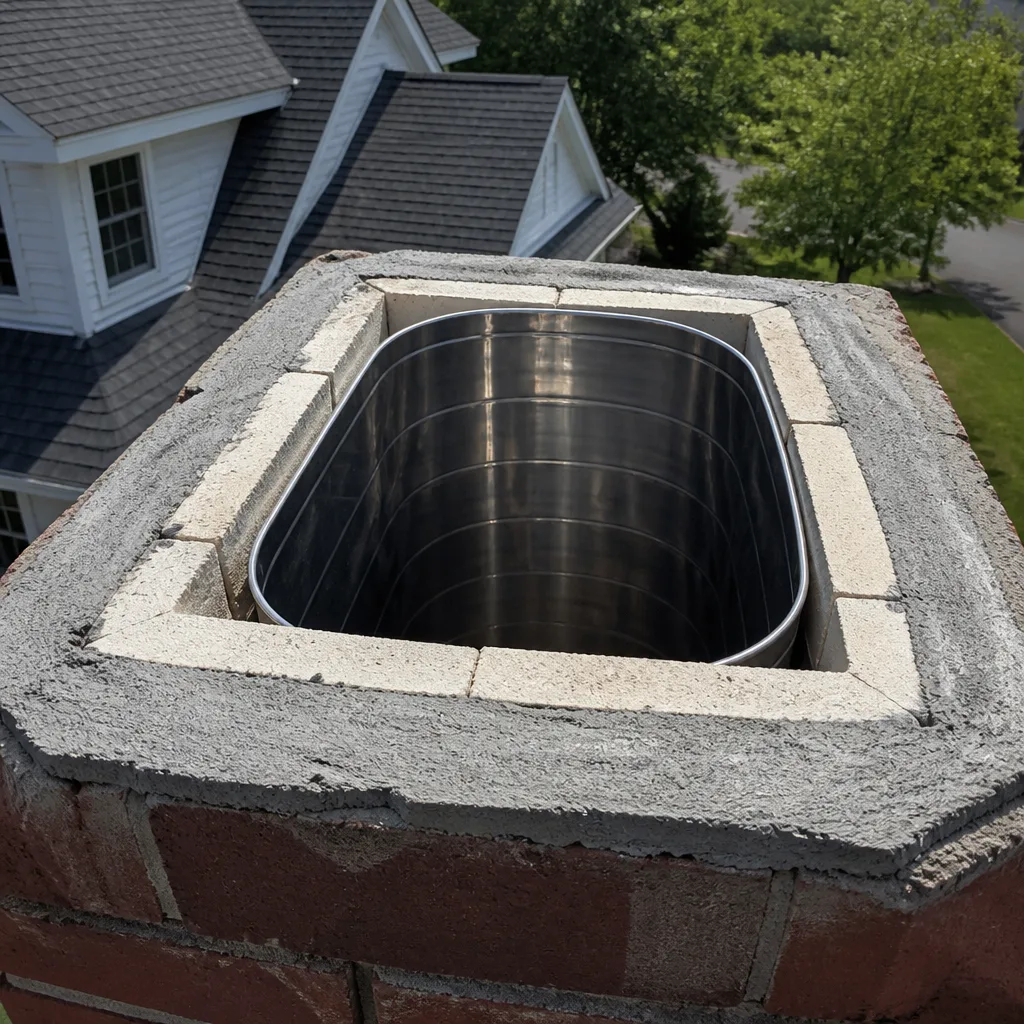 Flue relining
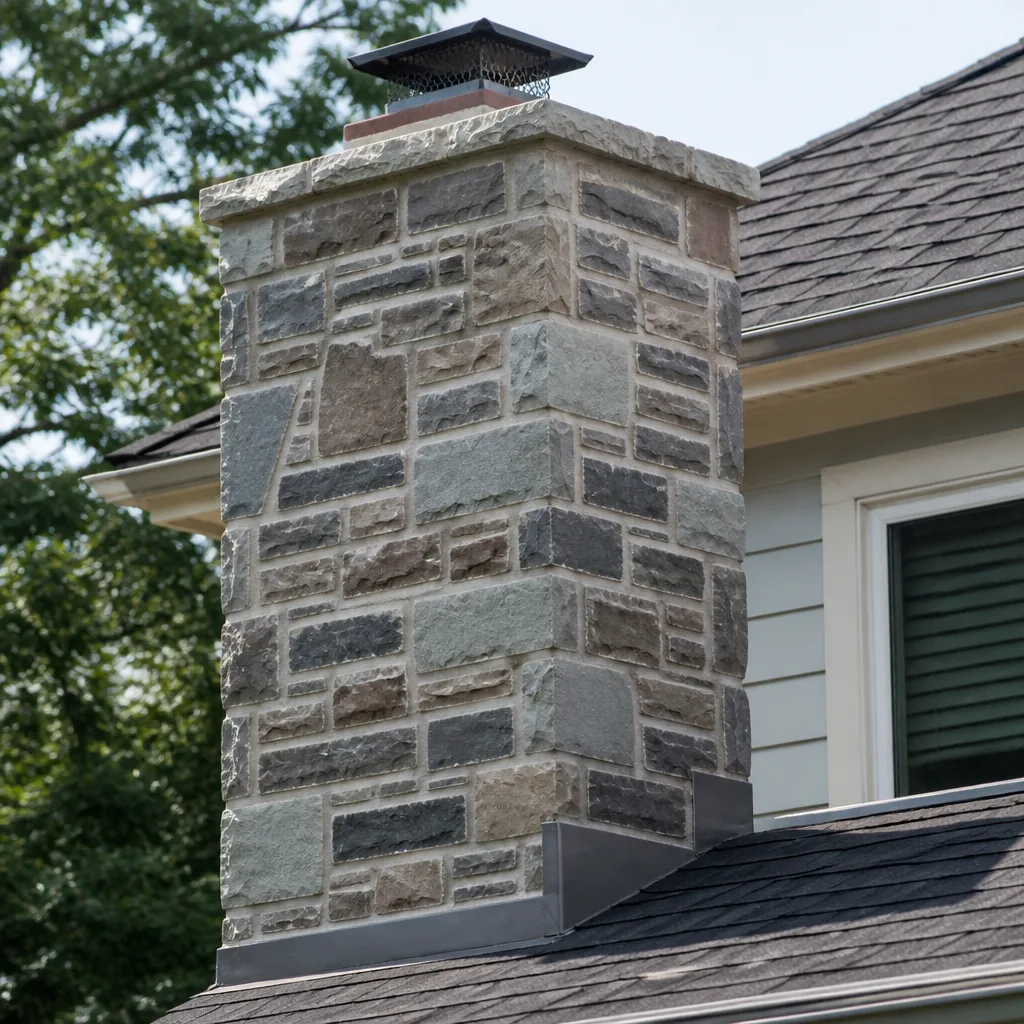 Masonry repair
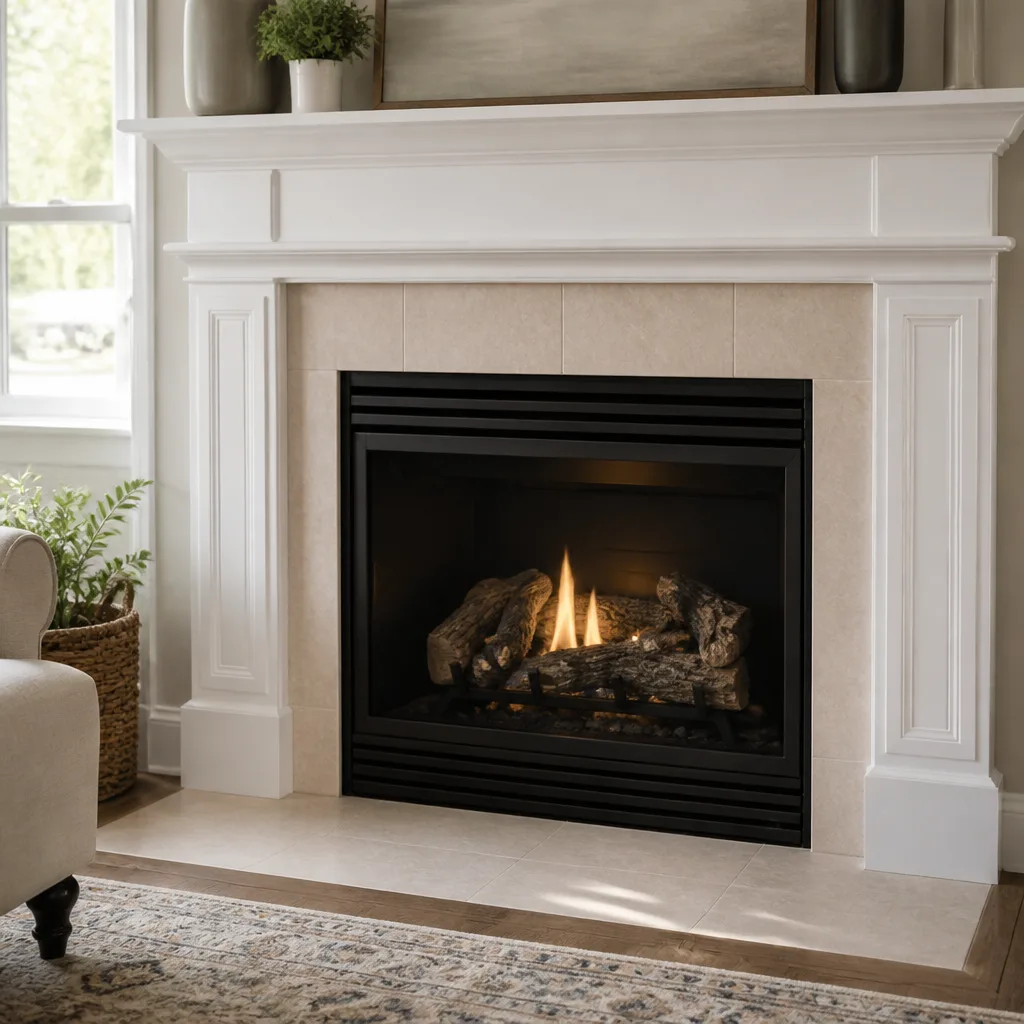 Gas fireplace service
Level 1 sweep and inspection to the NFPA 211 annual standard - flue, crown, cap, and flashing checked and photographed
Chimney sweep logs do not sweep chimneys. They loosen some creosote - which then falls where a brush and vacuum still have to collect it.
Chimney Cleaning Warning Signs: A Louisville Homeowner’s Reference Guide
The white staining on your chimney’s exterior bricks is called efflorescence, and it means water has already been moving through your masonry long enough to carry dissolved salts to the surface. It’s not a cosmetic issue. It’s a moisture infiltration report written in mineral deposits, and it usually shows up months before anything you’d notice from the living room. That gap between what you can see from the couch and what’s actually happening inside the chimney system is the whole problem. In this guide, we’ll walk through the warning signs Louisville homeowners can spot from the house, the ones only visible on the exterior, and the ones that don’t appear until a camera is inside the flue. You’ll learn which signs mean stop using the fireplace today and which can wait for a scheduled visit.
Quick Answer
The most urgent chimney warning signs in Louisville are a missing cap, a cracked crown, glazed creosote on the flue walls, and smoke backing into the room. Signs that can usually wait for a scheduled visit include light soot buildup, a summer fireplace odor with no other symptoms, and minor firebox surface wear. The signs you can see from inside the house are often the last to appear, which is why an exterior check and a camera inspection matter as much as what you notice at the hearth.
Styles & brands we work with
- Sweep & inspection
- Caps & crowns
- Flue relining
- Masonry repair
- Gas fireplace service
Table of Contents
- Interior Warning Signs and What Each One Tells You
- Exterior Warning Signs Ranked by Urgency
- Flue Warning Signs That Only a Camera Inspection Finds
- Creosote Odor vs. Mold Odor vs. Animal Waste Odor
- Stop-Use-Immediately Signs vs. Schedule-Soon Signs
- Dryer Vent Warning Signs Most Homeowners Miss
- What Happens During a Professional Inspection
- When to Call a Professional
Interior Warning Signs and What Each One Tells You
These are the signs you’ll likely notice first, because they happen in the room where you actually use the fireplace. The catch is that most of them show up after a problem has already developed. By the time smoke rolls into your living room, the underlying draft or blockage issue has typically been building for a while.
Smoke backdraft. If smoke spills into the room when you open the firebox or light a fire, the chimney isn’t pulling air the way it should. That points to one of three things: a blockage (nesting material, a fallen tile, heavy soot), a draft problem caused by a flue that’s too short for the house, or negative pressure in the home from a tightly sealed structure or a competing exhaust fan. It’s a draft or blockage signal, not a cosmetic annoyance.
Fireplace odor in summer. A fireplace that smells smoky or sour when it’s warm and humid out is usually telling you about moisture interacting with creosote. Louisville’s humid summers push damp air down cool flues, and that combination reactivates the creosote residue left from winter burns. The smell gets worse on still, muggy days and fades when the weather dries out. It’s a sign the flue wants cleaning and possibly that moisture is getting in.
Deteriorating firebox mortar. When the mortar joints between the firebrick start crumbling or the brick faces flake off, that’s spalling from thermal cycling. Fireboxes expand and contract with every fire, and over time the mortar loses its grip. Gaps in the firebox let heat and gases escape where they shouldn’t, and a chimney system with failing firebox mortar needs a repair, not just a cleaning.
If any of these sound familiar, a chimney sweep with a camera inspection will tell you which one you’re dealing with. Our technicians have up to 13 years of experience reading exactly these clues.
Exterior Warning Signs Ranked by Urgency
Here’s the part most homeowners skip: a walk around the outside of the house. The exterior of your chimney system records its own history, and some of those records are more urgent than anything happening inside. We’ve ranked them from most to least pressing.
- Missing chimney cap (immediate). A cap keeps rain, birds, squirrels, and debris out of the flue. When it’s gone, animals nest inside the chimney and water runs straight down the liner. Every day without a cap is exposure. Professional-grade caps from Famco or Gelco are a straightforward fix, and we can install one so the flue stops taking on water and wildlife.
- Cracked crown (active water infiltration). The crown is the concrete slab on top that sheds water away from the masonry. A crack in the crown means water is moving into the chimney structure every time it rains. In Louisville, where spring storms and summer downpours are routine, a cracked crown lets moisture work into the brick and mortar all season.
- Spalling brick faces (freeze-thaw damage in progress). When the faces of the exterior bricks are flaking, peeling, or popping off, water has gotten into the brick and is freezing and expanding inside. Louisville winters bring enough freeze-thaw cycling to break down saturated masonry, and spalling brick means the damage is actively progressing. This is beyond a cleaning; it’s a repair.
- Efflorescence (past moisture movement). That white staining is the least urgent exterior sign, because it records moisture that was already moving through the masonry. But it isn’t nothing. Efflorescence tells you where water has been, which is worth understanding before you spend money on anything else.
Flue Warning Signs That Only a Camera Inspection Finds
Some problems live where no flashlight reaches from the firebox. These are the signs that only show up when a technician runs a camera down the flue, and they’re often the most consequential. This section is where Louisville Chimney Cleaning earns its keep on diagnosis, and it’s also where we slow down and explain what we’re seeing instead of handing you a list of repairs.
Glazed third-degree creosote. Creosote builds up in three stages. The early stage is light and flaky and cleans off easily. The middle stage is crusty and tougher. The third stage is glazed, hard, and shiny, and it’s the dangerous one, because it’s the most combustible form of the residue and it doesn’t come off with a normal brushing. Glazed creosote on the liner walls means the flue has been running cool or the wood has been poorly seasoned for a long stretch. It has to come off, and it may need more than a standard sweep to do it.
Cracked clay tile segments. Most older Louisville homes have clay tile liners. Clay tiles crack from thermal stress, settling, and moisture. A cracked tile segment lets heat and gases reach the surrounding structure, which is exactly what the liner exists to prevent. A camera sees these cracks; a brush doesn’t.
Offset joints in the liner. Where one tile meets the next and the joint has shifted, the liner is no longer a smooth pathway. An offset joint catches soot, disrupts draft, and can widen over time. In serious cases, the repair is a full reline, and that’s where we can offer chimney repair on the same visit with a DuraFlex stainless liner instead of sending you off to find a second company.
Creosote Odor vs. Mold Odor vs. Animal Waste Odor
When a smell comes from the fireplace, the smell itself is the diagnosis. Each type of odor points to a different underlying issue, and knowing which one you’re smelling tells you a lot about whether you’re looking at a cleaning, a moisture problem, or a wildlife removal.
- Creosote odor. Smoky, sharp, and sour. It gets stronger in warm, humid weather and fades when it’s cool and dry. This points to creosote residue in the flue, often reactivated by humid summer air moving down the chimney. The fix is a cleaning, and sometimes a check for moisture getting in.
- Mold odor. Musty, damp, and earthy. It doesn’t fade when the weather changes; it lingers as long as the moisture does. Mold in a chimney means water is getting in and staying in, which brings you back to the cap, the crown, and the masonry. Cleaning alone won’t solve it if the moisture source is still active.
- Animal waste odor. Ammonia-like, acrid, and often concentrated in one spot. It’s usually stronger during warmer weather, when the smell of droppings and nesting material in the flue becomes noticeable. If there’s a scratching or fluttering sound along with the smell, animals have moved in, and the flue needs clearing before it can be used again.
When we do a chimney sweep, the smell gets identified along with whatever else the inspection finds, so you’re not guessing from the living room. Smell is one clue. The camera is the evidence.
Stop-Use-Immediately Signs vs. Schedule-Soon Signs
Not every warning sign means the same thing. Some mean put the fire out and leave the fireplace alone until it’s been checked. Others mean call and schedule a visit before the next burning season. The difference matters, and it’s worth being clear about it rather than treating every sign the same.
Stop using the fireplace immediately
- Smoke backing into the room on a regular basis
- Visible glazed, shiny creosote on the flue walls
- A cracked or damaged liner, especially with separated segments
- Firebox mortar that’s crumbling away from the brick
- A missing cap or a visible gap letting water straight into the flue
- Any sign of an animal resident in the chimney
These conditions mean the chimney system can’t safely contain what a fire produces. A fire in a flue with cracked tiles or heavy third-degree creosote is where a chimney fire risk becomes real, and we won’t pretend otherwise. A trained technician should look at it before you light another fire.
Schedule a visit soon
- Light, flaky soot visible on the flue walls
- A summer fireplace odor with no smoke or water symptoms
- Efflorescence with no other exterior damage
- Minor firebox surface wear that isn’t exposing gaps
- Soot or residue buildup approaching the point where a cleaning is due
These signs don’t require a dramatic response, but they’re a reason to book a visit rather than put it off again. In Louisville, a dryer vent cleaning can be scheduled alongside the chimney check so both venting systems get looked at in one appointment.
Dryer Vent Warning Signs Most Homeowners Miss
The same combustion-safety mindset that applies to your chimney applies to the dryer vent, and it’s a part of the house most people never think to check. Lint accumulation in a dryer vent restricts airflow and creates a fire hazard, and a restricted dryer vent makes the dryer run hot and long. It’s the same category of risk as a blocked flue, just in a different part of the house.
Signs worth paying attention to:
- Clothes take two cycles or more to dry
- The dryer or the wall gets hot to the touch while running
- Lint is visible around the outside vent flap
- The outside flap doesn’t open fully or doesn’t open at all
- A musty or burning smell when the dryer runs
- The vent run is long, or it’s routed through the attic or crawlspace
Most chimney companies don’t offer dryer vent cleaning. We do, because it’s the same fire-safety framework and the same diagnosis-first approach. If your dryer vent hasn’t been cleaned in years and you’ve just been living with the extra cycle time, that’s a sign worth acting on instead of ignoring.
What Happens During a Professional Inspection
An inspection is where the warning signs get sorted into what’s real and what’s not. Here’s the general sequence of a professional visit, so you know what to expect.
- Interior check. We look at the firebox, damper, smoke chamber, and the inside of the flue, and ask what you’ve noticed at the hearth over the past burning season.
- Exterior check. A walk around the chimney to look at the cap, crown, flashing, and brickwork, plus a look at the roof line and any signs of water movement.
- Camera inspection. A camera goes down the flue so we can see creosote stage, tile condition, joints, and anything the flashlight can’t reach. This is where the flue-specific signs show up.
- Cleaning. The sweep itself, done with the right tools for the creosote stage we found. A standard sweep won’t remove glazed third-degree creosote; that requires more, and we’ll explain why.
- Repair scope, if needed. If the inspection turns up a cracked crown, spalling masonry, a failed cap, or a damaged liner, we can quote the repair and in many cases do it on the same visit rather than handing you off to a different contractor. HeatShield resurfacing for damaged flue interiors and a DuraFlex stainless liner for a full reline are the repair tiers we work with.
- A written report. You get the findings, the photos, and a written estimate. Nothing is recommended without the evidence to back it up, and the estimate sets the price.
We’ve run this sequence on old Louisville homes where the liner and the masonry have aged together, and on newer homes with a gas insert and a venting system that never gets looked at. The order doesn’t change. The findings do.
Common Mistakes to Avoid
- Only checking the inside. The most urgent signs are often exterior: the missing cap, the cracked crown, the spalling brick. If you only look at the fireplace, you’ll miss the ones that cost the most to ignore.
- Treating efflorescence as cosmetic. White staining on the bricks is a moisture record, not a stain to power-wash away. If you clean it off without finding the moisture source, it comes back.
- Assuming a clean flue is a safe flue. A sweep removes soot. It doesn’t fix a cracked tile, an offset joint, or mortar that’s given way. Cleaning and inspection are different jobs.
- Burning unseasoned wood. Damp wood burns cool and lays down creosote faster. In Louisville’s humid climate, firewood needs real drying time before it goes in the firebox.
- Ignoring a summer fireplace odor. A smell that shows up in the humid months and fades in the dry ones is telling you about moisture and creosote interacting, and it’s worth a look before the next heating season.
- Skipping the dryer vent. Lint buildup is a fire risk in the same family as a blocked flue, and most homeowners never think to have it checked. If your dryer takes two cycles, that’s your sign.
- Letting an animal resident stay. A nest in the flue blocks draft and is a fire risk. If you hear scratching or fluttering, get the flue cleared and a proper cap installed.
See the difference
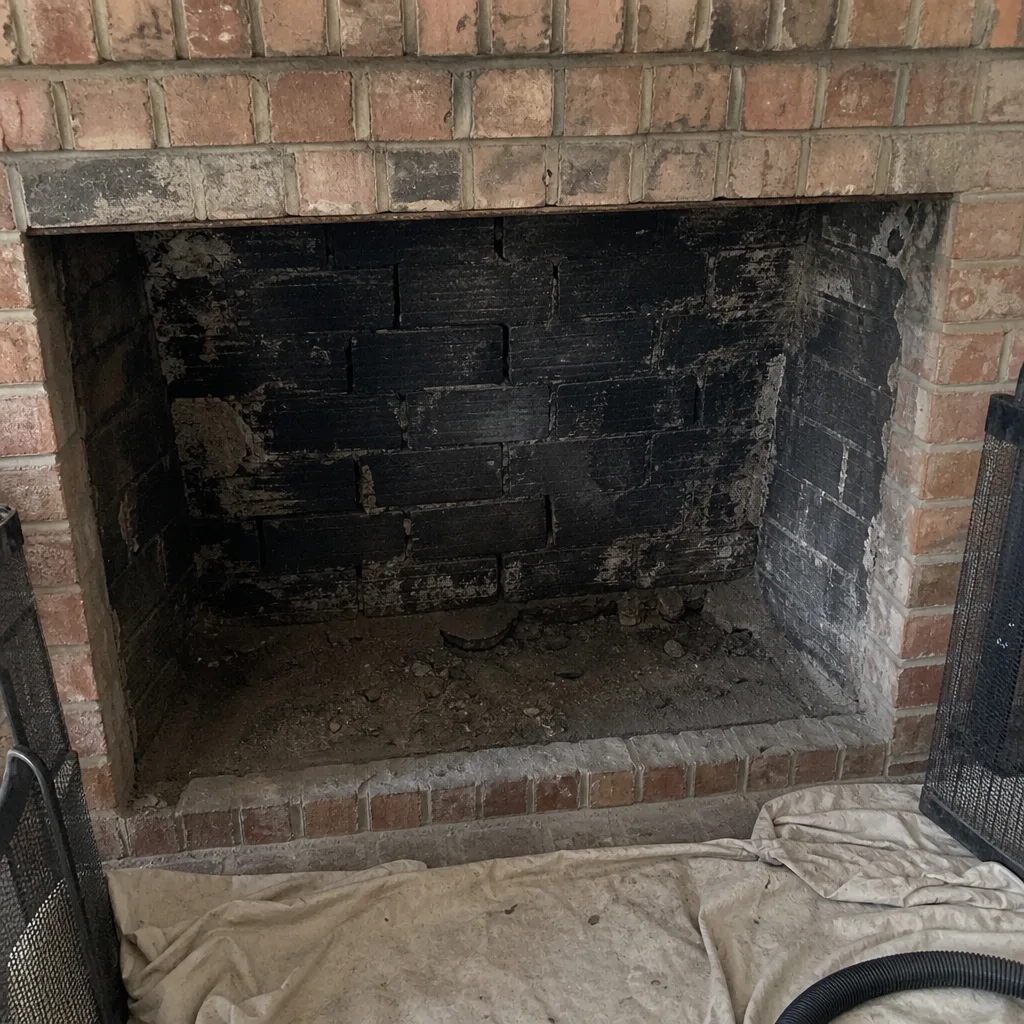 Before
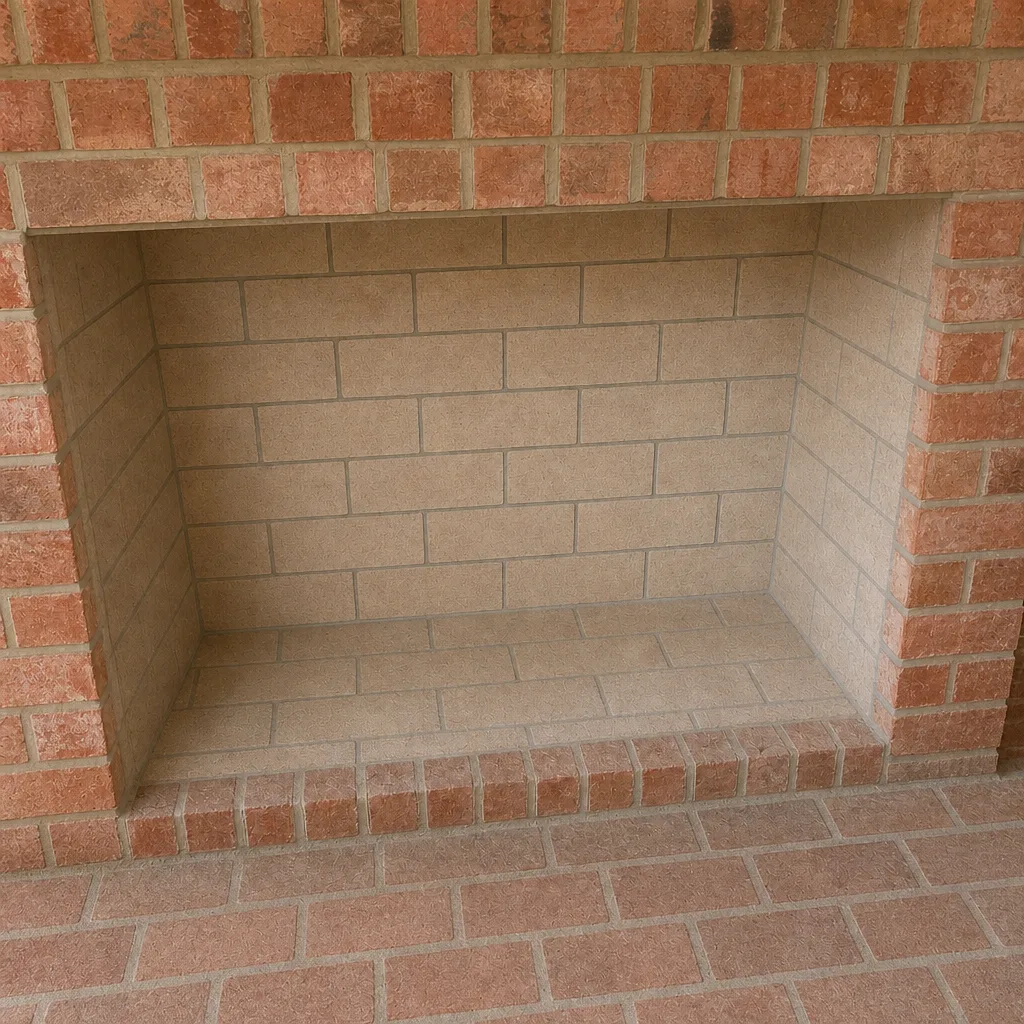 After
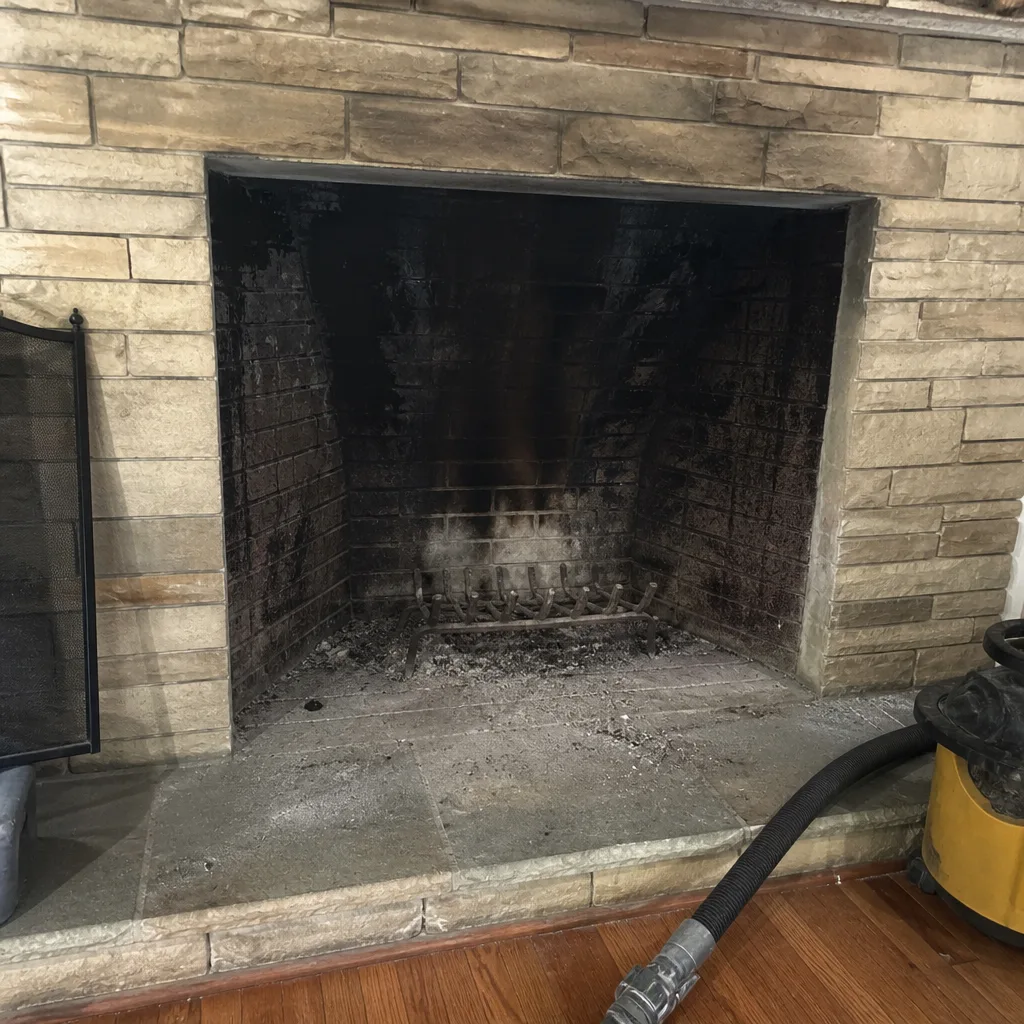 Before
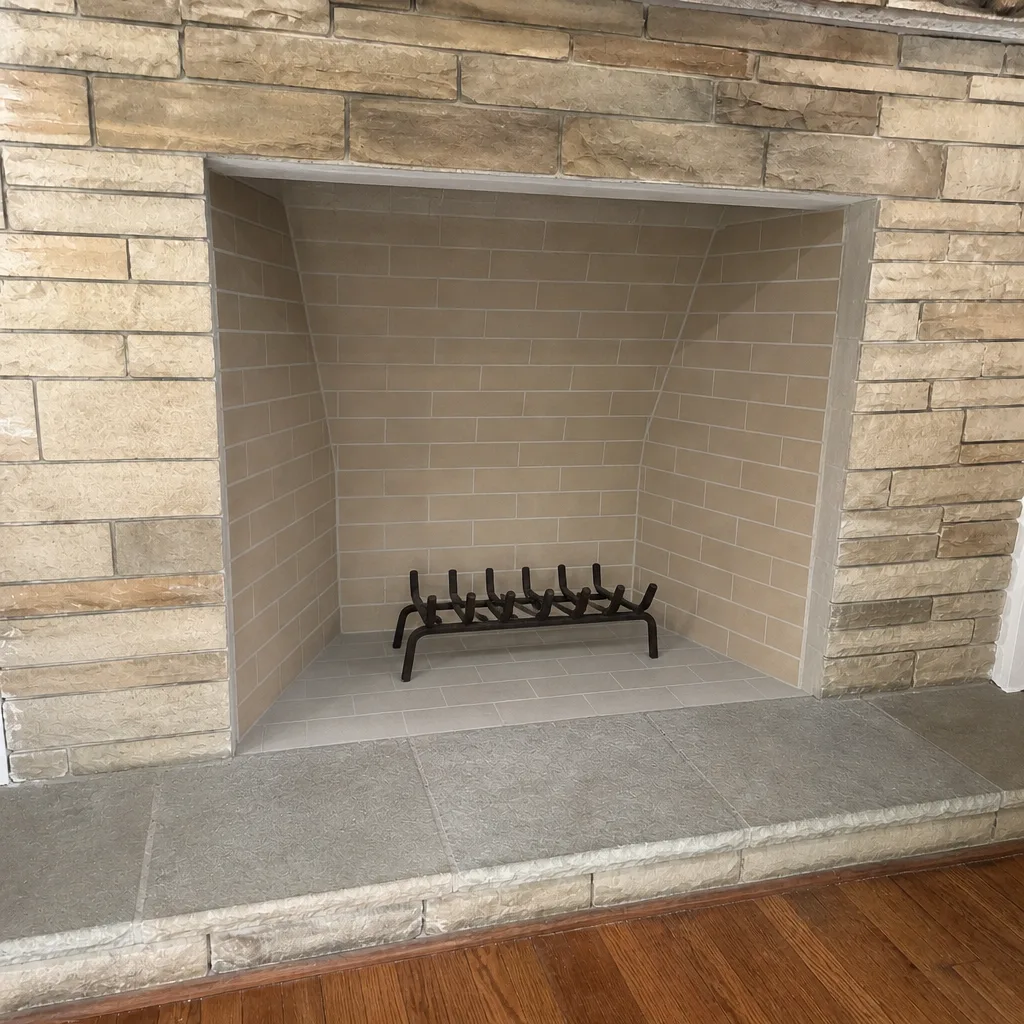 After
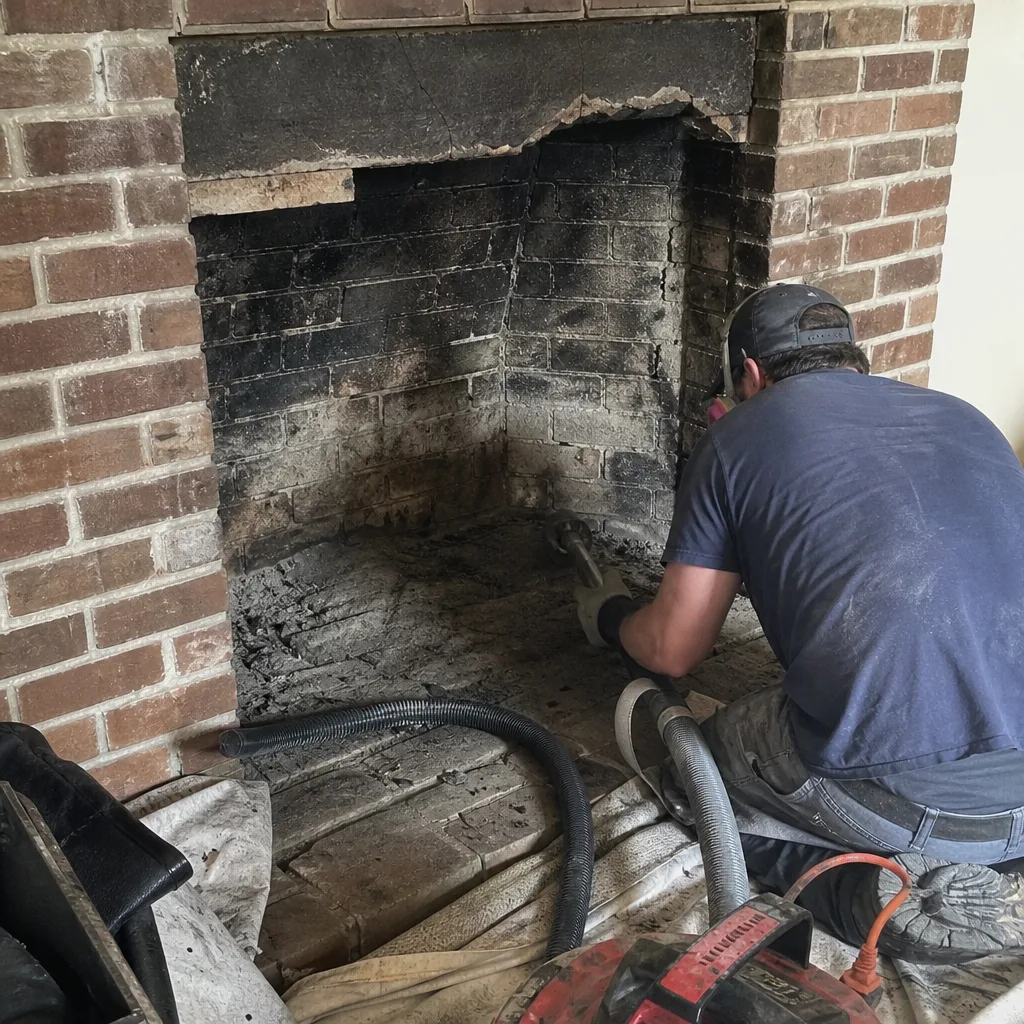 Before
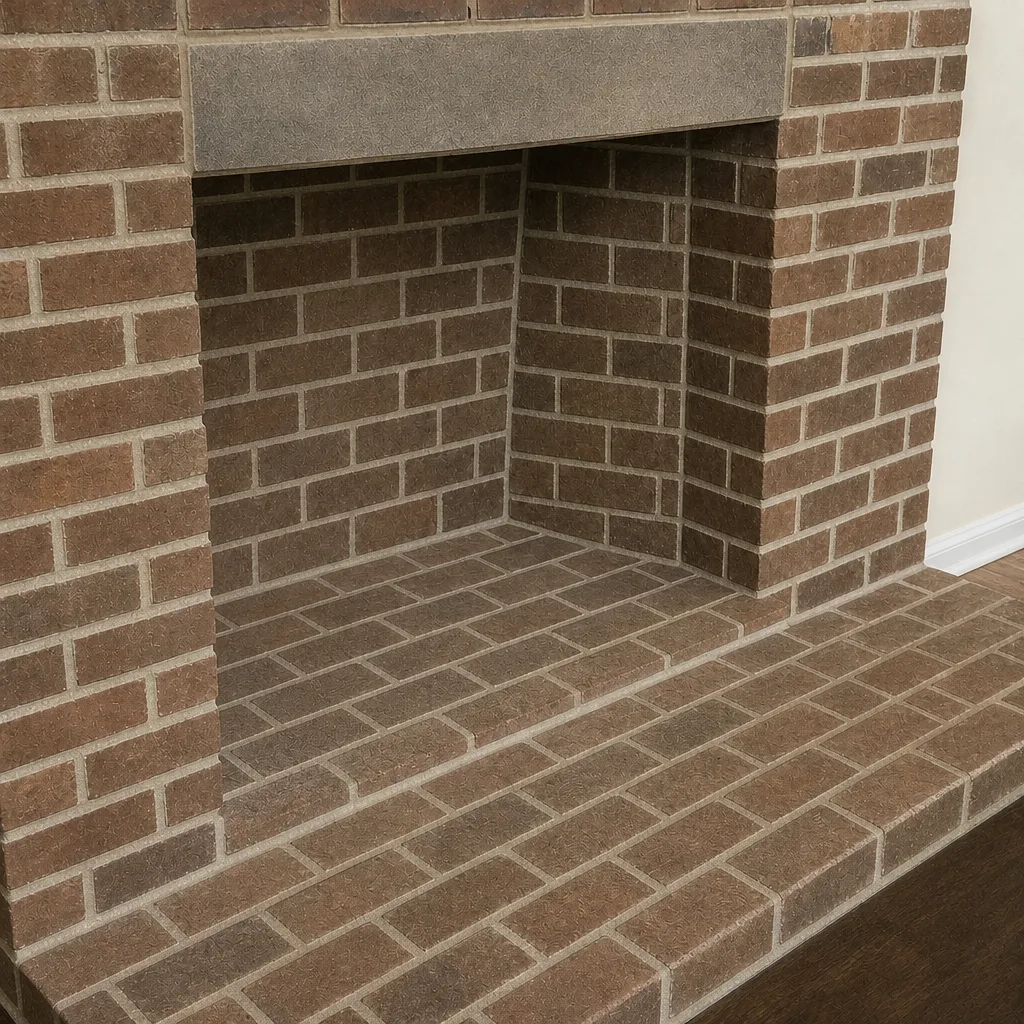 After
When to Call a Professional
Some things you can check on your own: the cap, the crown, the brick faces, and the outside vent flap. But when the signs point inside the flue, or when you’re not sure whether what you’re seeing is serious, that’s the point to bring in a trained technician. Smoke backing into the room, glazed creosote, a cracked liner, a crumbling firebox, or a missing cap that’s been gone a while all deserve a professional look before the next fire. The same applies to a dryer vent that’s never been cleaned. At Louisville Chimney Cleaning we handle cleaning, repair, and dryer vent work under one roof, so a cleaning that uncovers a liner crack doesn’t turn into a hunt for a second contractor. The estimate is free, and the price is set by the written estimate before any work starts. Call (844) 560-6386. We answer 24/7. Fast dispatch from 7am to 7pm, Sunday through Friday.
Frequently Asked Questions
The first sign most homeowners notice is usually an interior one: smoke backing into the room, a smoky odor in summer, or crumbling mortar in the firebox. But the earliest signs are often exterior, like a missing cap or a cracked crown, because they’ve been exposing the chimney to water long before anything shows up inside. Check the outside of the chimney first, then note what you notice inside. Call (844) 560-6386 for an exact quote if you find something you can’t identify; estimates are free.
White staining is efflorescence, and it means water has been moving through the masonry long enough to carry dissolved salts to the surface. It records past moisture movement rather than active damage, but it’s worth understanding where that water came from. A cracked crown or failed flashing is the usual culprit, and both are worth a look. Call (844) 560-6386 for a free estimate if you want the source identified.
Creosote smells smoky, sharp, and sour, and it gets stronger in humid weather and fades when it’s dry. Mold smells musty and damp and lingers as long as moisture is present. Animal waste smells acrid and ammonia-like, and it’s often accompanied by scratching sounds. Each points to a different underlying problem, and an inspection confirms which one you’re dealing with. Call (844) 560-6386 for an exact quote; estimates are free.
Stop using it if smoke backs into the room, if you can see glazed creosote on the flue walls, if the liner is cracked or separated, if firebox mortar is crumbling away from the brick, or if an animal has taken up residence in the chimney. These conditions mean the chimney can’t safely contain what a fire produces. Signs like light soot, a summer odor, or efflorescence without other damage can wait for a scheduled visit. Call (844) 560-6386 for an exact quote; estimates are free.
No. Glazed third-degree creosote is hard and shiny, and a standard brush won’t remove it. It needs more aggressive removal, and sometimes the flue interior needs resurfacing afterward, which is where HeatShield resurfacing comes in. This is one of the signs that only a camera inspection finds. Call (844) 560-6386 for an exact quote; estimates are free.
Louisville’s humid summers and freeze-thaw winters do stress a chimney system. Summer humidity pushes damp air down cool flues and reactivates creosote odors, while winter freezing and thawing breaks down saturated brick and mortar, which is what produces spalling. Efflorescence, a cracked crown, and deteriorating brick faces are all more likely in a climate with these swings. An inspection in Louisville, KY tells you what your specific chimney is dealing with. Call (844) 560-6386 for an exact quote; estimates are free.
The Bottom Line
The signs you can see from the living room are the ones you’ll notice first, but they’re often the last to appear. The most urgent warnings live on the exterior and inside the flue: the missing cap, the cracked crown, the spalling brick, the glazed creosote, and the cracked liner tile. Knowing which signs mean stop using the fireplace and which mean schedule a visit is the difference between a routine cleaning and an avoidable repair. We work with professional-grade materials from brands like Famco, Copperfield, DuraFlex, and HeatShield, and we handle cleaning, repair, and dryer vent work under one roof. If you’ve spotted any of these signs, the next step is a look from a professional, not another season of hoping it’s nothing.
Call (844) 560-6386 for a free estimate. We answer 24/7. Fast dispatch from 7am to 7pm, Sunday through Friday. Whether you’re ready to book a cleaning or just want the signs you found looked at by someone who reads them every day, we’ll walk you through what we find and what it means before anything gets quoted.
Written by the team at Louisville Chimney Cleaning.